
Social media monetization is the process of generating income from your social media presence by leveraging your audience’s reach, engagement, and trust. Put simply, it’s turning the content you already create into real revenue. The global social media advertising market is substantial in 2026, and that number only tells part of the story. Creators are earning through far more than ads alone.
The main income streams available to you right now include:
- Ad revenue sharing from platforms like YouTube and Facebook
- Brand partnerships and sponsored content paid directly by companies
- Affiliate marketing commissions from product recommendations
- Direct sales of your own products, services, or digital downloads
- Subscriptions and fan funding through platforms like Patreon or native membership tools
Here’s what makes this exciting for solo creators: you don’t need a massive following to start. Many nano-creators with 1,000–10,000 followers can earn $100–$1,000 monthly by focusing on targeted monetization in high-engagement niches. Follower count matters far less than you might think.
What are the most common social media monetization methods in 2026?
The creator economy has matured fast, and the menu of options has grown with it. Understanding each method helps you pick the right starting point instead of spinning your wheels trying everything at once.
- Sponsored content and brand partnerships: A brand pays you to feature their product or service in your content. Rates vary widely based on your niche, engagement rate, and platform, but this is often the highest single-payout method for mid-size creators.
- Affiliate marketing: You share a unique link or discount code, and earn a commission every time someone buys through it. Amazon Associates, ShareASale, and Impact are popular affiliate networks. The beauty here is that you can start with zero followers minimum on most networks.
- Platform-native monetization programs: YouTube’s Partner Program (AdSense revenue sharing), TikTok’s Creator Rewards Program, Instagram’s Bonuses program, and Facebook’s in-stream ads all pay creators directly based on views or engagement.
- Direct product and service sales: Selling your own digital products (courses, templates, ebooks), physical merchandise, or consulting services. This is where the real margin lives.
- Subscriptions and fan funding: Patreon, Substack, YouTube Memberships, and Instagram Subscriptions let your most loyal audience pay a recurring fee for exclusive content or perks.
- Merchandise: Print-on-demand services like Printful or Printify let you sell branded products without holding inventory.
- Digital products: Notion templates, Lightroom presets, prompt packs, and similar low-cost, high-margin items have become a staple for solo creators who want scalable expertise monetization.
No single method works for everyone. Your niche, platform, and audience size all shape which combination makes the most sense for you right now.
What do platforms actually require before you can monetize?
Getting approved for platform monetization programs isn’t automatic. Each platform has its own thresholds, and understanding them upfront saves you a lot of frustration. Here’s a practical breakdown:
- YouTube: 1,000 subscribers and 4,000 watch hours in the past 12 months (or 10 million Shorts views in 90 days) to join the YouTube Partner Program. You’ll also need an AdSense account and must comply with YouTube’s monetization policies.
- TikTok: The Creator Rewards Program requires 10,000 followers, 100,000 video views in the past 30 days, and you must be 18 or older. TikTok LIVE Gifts has a lower bar at 1,000 followers.
- Instagram: No fixed follower minimum for affiliate tools or product tags, but Instagram’s Subscriptions and Bonuses programs are invite-only or require meeting engagement benchmarks Instagram sets internally.
- Facebook: In-stream ads require 10,000 followers and 600,000 total minutes viewed in the last 60 days. Facebook Stars (fan funding) requires 500 followers and 21 days since page creation.
- X (Twitter): X Premium subscribers can access ad revenue sharing if they have 500 followers and 5 million organic impressions in the past 3 months.
- LinkedIn: LinkedIn’s Creator Accelerator and newsletter monetization features are currently limited to invited creators, with no publicly listed follower threshold.
Beyond hitting the numbers, platform eligibility involves an approval step where the platform reviews your content history for policy compliance, followed by a payout setup (usually via PayPal, Stripe, or direct deposit). Violating community guidelines at any point can pause or permanently revoke your monetization access, so staying within the rules isn’t optional.
Legal and FTC compliance essentials you need to know

If you’re monetizing in the United States, the Federal Trade Commission has clear rules about disclosure, and ignoring them carries real consequences. The FTC’s endorsement guidelines require that you clearly and conspicuously disclose any material connection to a brand, including paid partnerships, gifted products, and affiliate relationships.

“Clear and conspicuous” means the disclosure must be hard to miss. Burying “#ad” at the end of a caption full of hashtags doesn’t cut it. Saying “Thanks to [Brand] for sponsoring this video” verbally while the screen shows something else doesn’t cut it either. The FTC expects the disclosure to be placed where viewers will actually see or hear it, before they engage with the promotional content.
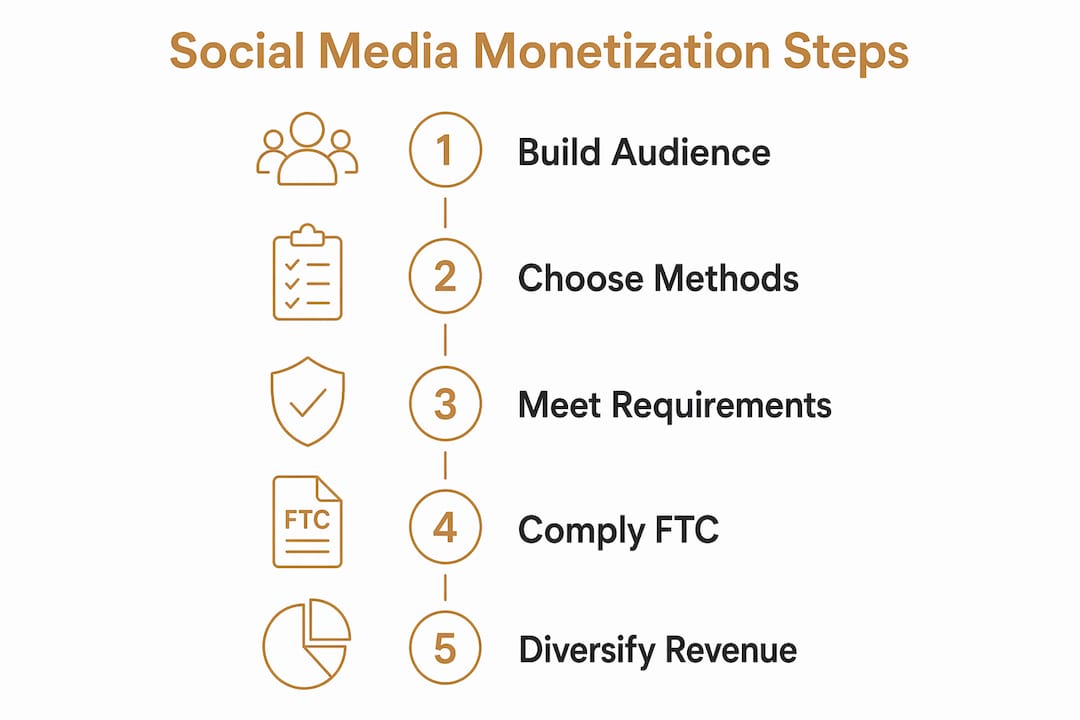
Here’s what failure to disclose can cost you: regulatory action from the FTC, potential fines, and something harder to recover from, which is the erosion of your audience’s trust. Audiences are savvy. When they feel misled, they leave.
Key compliance steps every creator should follow:
- Label sponsored posts with #ad, #sponsored, or the platform’s built-in paid partnership tag.
- Disclose affiliate links clearly, either in the caption, video description, or verbally in video content.
- Never imply independence when you have a financial relationship with a brand you’re recommending.
- Keep records of your brand agreements and disclosure practices in case of an audit.
- Review platform-specific rules alongside FTC rules, since some platforms (like YouTube) have their own disclosure checkboxes that are required in addition to in-content disclosures.
Ethical monetization isn’t just about staying legal. It’s the foundation of a long-term creator business. Audiences follow creators they trust, and that trust is worth protecting.
How do you build social media monetization that actually lasts?
Here’s the honest truth about sustainable income from social media: the creators who burn out or lose everything to one algorithm change are almost always the ones who built on rented land. Platform ad revenue and brand deals are rented income. They’re controlled by someone else’s rules, someone else’s algorithm, and someone else’s budget cycle.
Owned income from digital products, services, and memberships often yields profit margins near 90%, compared to the much thinner margins on affiliate commissions or ad revenue. That gap is worth building toward deliberately.
The smartest approach is staged:
- Start with low-friction methods. Affiliate marketing and offering services require no upfront product creation and let you validate what your audience actually wants to buy.
- Build your owned assets in parallel. Use your social platforms to drive traffic to an email list, a website, or a community you control. When an algorithm shifts, your email list doesn’t disappear. This is what platform-proof monetization looks like in practice.
- Evolve toward owned products and memberships once you’ve confirmed demand. A course or template library built for an audience that’s already buying from you is far less risky than building blind.
- Niche down to earn more. Finance and B2B content commands CPM rates of $20–$50 per 1,000 views, while general lifestyle content sits closer to $2–$8. Your niche is a pricing lever, not just a content choice.
- Combine income streams intentionally. Platform ads, affiliate income, brand deals, and your own products each have different risk profiles. Layering them creates stability.
Pro Tip: Never let any single income source represent more than 50% of your total social media revenue. When one stream dries up (and at some point, one always does), the others keep you afloat. Think of it like a three-legged stool: the more legs, the harder it is to knock over.
For a deeper look at combining revenue streams as a solo operator, the Yoursolobusiness resource library has you covered. Building personal brand authority alongside your monetization strategy also accelerates how quickly audiences trust you enough to buy.
Common pitfalls that get creators demonetized or suspended
Getting demonetized feels like the floor dropping out. One day you’re earning, the next you’re locked out of your revenue. Most of the time, it’s preventable.
Violating content policies is the fastest route to losing monetization access. Platforms are specific about what content qualifies for ad revenue. On YouTube, “advertiser-friendly content” excludes excessive profanity, controversial topics without proper context, and misleading thumbnails. On TikTok, content that violates community guidelines gets removed before it ever earns anything.
Buying followers or engagement is another trap. Platforms actively detect artificial inflation, and accounts caught doing it face permanent bans, not just demonetization. Worse, fake followers destroy your engagement rate, making you less attractive to brands even if you avoid suspension.
Other pitfalls to watch for:
- Ignoring copyright rules. Using unlicensed music, clips, or images in your content can trigger Content ID claims on YouTube or content removal across other platforms, both of which cut into earnings.
- Inconsistent posting. Most platform algorithms reward consistency. Creators who post sporadically often see their reach drop, which directly affects ad revenue and brand deal appeal.
- Over-promoting too early. Audiences that feel like they’re being sold to constantly disengage fast. A good rule of thumb is to keep promotional content to no more than 20% of your total output.
- Neglecting policy updates. Platforms update their monetization policies regularly. What was allowed six months ago may now be restricted. Set a reminder to review platform policies quarterly.
- Relying on a single platform. If that platform changes its algorithm, reduces its creator fund payouts (as TikTok did with its original Creator Fund), or bans your account, your income disappears overnight. Diversifying across platforms and growing your solo business beyond any single channel is the only real protection.
The creators who stay monetized long-term treat platform rules like a business contract. They read them, follow them, and adapt when they change.
A closer look at the four core revenue models
Every social media monetization strategy ultimately comes back to four revenue models. Understanding how each one works, and what it demands from you, helps you build a mix that fits your actual situation.
Ad revenue sharing
Platforms pay you a share of the advertising revenue generated by your content. YouTube’s Partner Program is the most established version of this. Your earnings depend on your CPM (cost per thousand views), which fluctuates based on your niche, audience geography, and the time of year (Q4 typically pays the highest CPM rates). Ad revenue is passive once content is published, but it requires consistent volume and a large enough audience to generate meaningful income on its own.
Sponsorships and brand partnerships
A brand pays you a flat fee, a performance bonus, or both to feature their product. Rates are negotiated directly and can range from a few hundred dollars for a nano-creator post to tens of thousands for a mid-tier YouTube integration. The key variable is your engagement rate, not just your follower count. A creator with 15,000 highly engaged followers in a specific niche often commands better rates than one with 200,000 passive followers. Building a trusted personal brand is what makes brands want to work with you repeatedly.
Affiliate marketing
You earn a commission, typically 5%–30% depending on the product category, every time someone buys through your unique link or code. Software and digital products tend to pay the highest affiliate rates. This model works especially well for creators who review or recommend tools as part of their regular content, since the recommendation feels natural rather than transactional. The downside is that you don’t control the product, the price, or the commission rate, all of which can change at any time.
Merchandise and owned product sales
This is where your income becomes truly yours. Merchandise through print-on-demand requires minimal upfront investment. Digital products like templates, courses, or ebooks scale without additional effort once created. Services (consulting, coaching, done-for-you work) convert at high rates for creators with demonstrated expertise. The freelancer revenue strategies that work best combine at least one of these owned models with a platform-native income stream, so you’re never fully dependent on a third party’s payout schedule.
Key Takeaways
Social media monetization works best when you layer owned income sources over platform-dependent ones, starting with low-friction methods and building toward higher-margin products as your audience grows.
| Point | Details |
|---|---|
| Monetization is accessible early | Nano-creators with 1,000–10,000 followers can earn $100–$1,000 monthly with the right niche focus. |
| Platform thresholds vary widely | YouTube requires 1,000 subscribers and 4,000 watch hours; TikTok’s Creator Rewards Program requires 10,000 followers. |
| FTC disclosure is non-negotiable | Clearly label all sponsored content and affiliate links before the promotional content appears. |
| Owned income beats rented income | Digital products and services yield margins near 90%, far above ad revenue or affiliate commissions. |
| Diversification protects your income | No single revenue stream should exceed 50% of your total earnings to guard against algorithm or policy changes. |
This article is general information, not legal or financial advice. Confirm current FTC rules and platform policies with the relevant primary sources or a qualified professional for your specific situation.