

Every solopreneur knows the challenge of standing out while balancing endless demands. Social media offers more than quick promotion – it acts as a strategic ecosystem for relationship-driven business growth. Creative professionals gain the power to connect directly with their audience, build personal brands, and open new revenue channels. This guide delivers practical insights on using major platforms and proven tactics to strengthen your digital presence without sacrificing work-life balance.
Key Takeaways
| Point | Details |
|---|---|
| Leverage Social Media | Solopreneurs should view social media as a strategic tool for relationship building, branding, and business opportunities rather than just self-promotion. |
| Platform Specific Strategies | Each social media platform serves unique purposes and target audiences; solopreneurs must optimize their content strategy accordingly. |
| Authenticity in Branding | Creating genuine, relatable content is crucial for effective personal branding, fostering deeper connections with the audience. |
| Responsible Engagement Management | Establishing boundaries for online engagement is essential to prevent burnout while maintaining a sustainable business model. |
What Social Media Means for Solopreneurs
Social media represents far more than a digital marketing platform for solopreneurs – it’s a strategic ecosystem for building relationships, establishing credibility, and generating business opportunities. Unlike traditional advertising, social media enables direct, two-way communication that transforms how independent professionals connect with potential clients and collaborators.
At its core, social media offers solopreneurs a powerful set of tools for personal branding and audience engagement. Relationship-driven content strategies allow entrepreneurs to showcase their expertise, personality, and unique value proposition across multiple digital channels. The key is understanding how different platforms serve distinct purposes:
- LinkedIn: Professional networking and B2B connections
- Instagram: Visual storytelling and brand personality
- Twitter: Real-time industry insights and quick engagement
- TikTok: Creative demonstrations and personality-driven content
- YouTube: In-depth tutorials and long-form expertise sharing
Successful solopreneurs recognize that social media isn’t about constant self-promotion, but about creating genuine value for their target audience. This means developing content that educates, entertains, or solves specific problems for potential clients. By consistently sharing high-quality, relevant material, independent professionals can transform their social media presence from mere digital noise into a meaningful business growth engine.

Pro tip: Develop a content calendar that balances personal insights, professional expertise, and audience-focused value to maintain consistent, engaging social media presence.
Major Platforms and Their Unique Benefits
Social media platforms aren’t created equal – each offers solopreneurs distinct opportunities for professional growth, audience engagement, and strategic communication. Platform-specific communication strategies enable independent professionals to leverage unique digital environments tailored to their specific business goals.
Understanding the strengths of different platforms allows solopreneurs to create targeted, effective digital marketing approaches. Here’s a comprehensive breakdown of major social media platforms and their unique advantages:
-
LinkedIn: Professional networking powerhouse
- Ideal for B2B connections
- Enables detailed professional profile building
- Best for industry thought leadership
-
Instagram: Visual storytelling platform
- Perfect for creative professionals
- Supports high-engagement visual content
- Excellent for personal brand development
-
Twitter: Rapid information exchange
- Quick industry insights and networking
- Real-time communication
- Supports trending topic engagement
-
YouTube: Long-form content and expertise showcase
- In-depth tutorial and educational content
- Builds credibility through video presentations
- Supports monetization through multiple channels
-
TikTok: Short-form creative expression
- Reaches younger demographic
- Supports viral content creation
- Enables personality-driven branding
Effective solopreneurs don’t just choose platforms randomly – they strategically select channels that align with their target audience, content style, and professional objectives. By understanding each platform’s unique communication style and audience expectations, independent professionals can craft compelling digital narratives that attract, engage, and convert potential clients.
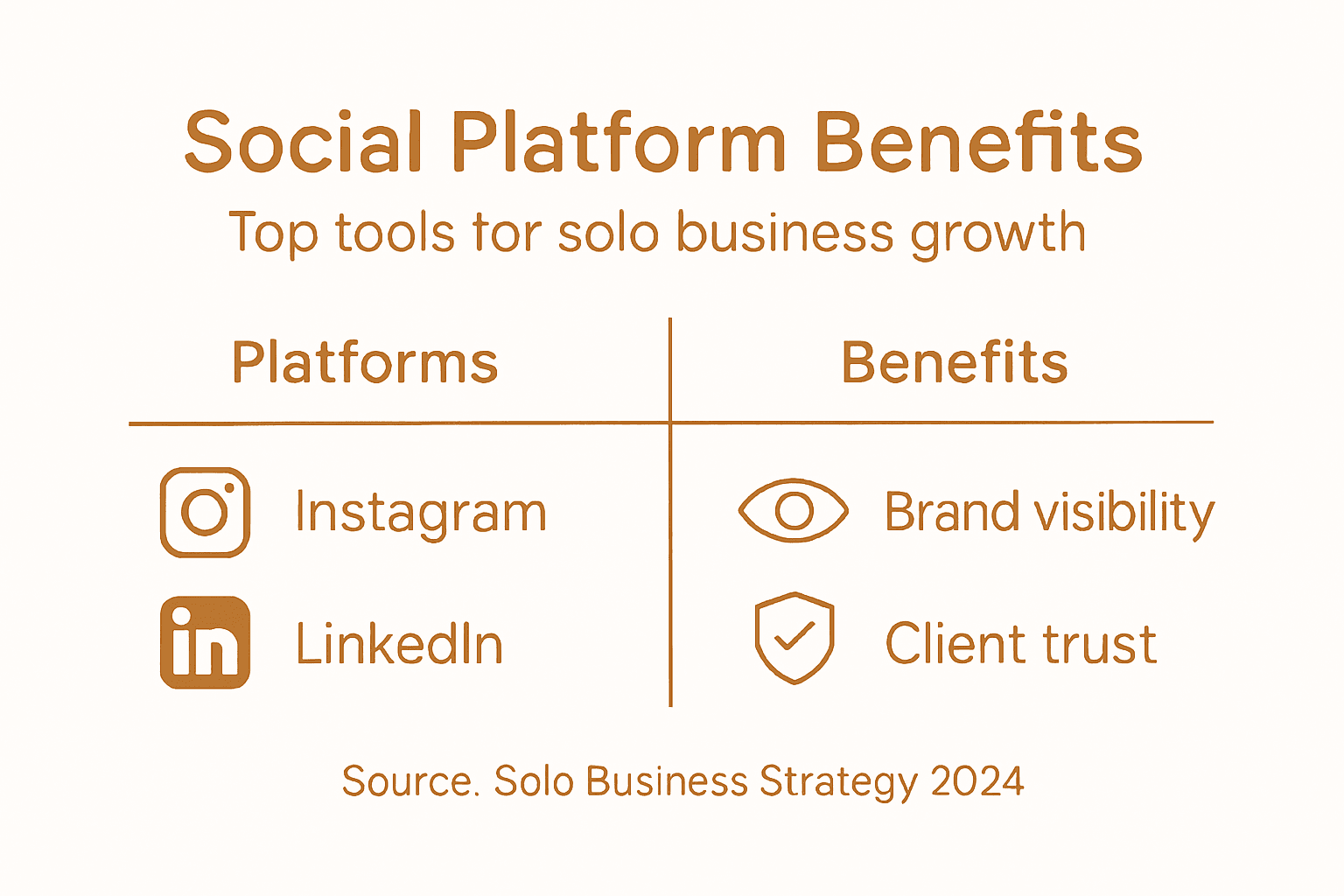
Here is a side-by-side comparison showing how major social media platforms can best serve different types of solopreneurs:
| Platform | Audience Fit | Best Content Format | Strategic Benefit |
|---|---|---|---|
| B2B, professionals | Insightful posts, articles | Builds authority and partnerships | |
| Creative, lifestyle | Visual posts, stories | Drives brand identity and reach | |
| Tech, media, experts | Quick takes, threads | Real-time updates, trend access | |
| YouTube | Instructors, educators | Tutorials, vlogs | Builds trust through deep content |
| TikTok | Gen Z, creative makers | Short, viral videos | Rapid audience growth potential |
Pro tip: Develop a cross-platform content strategy that adapts your core message to each platform’s unique communication style and audience preferences.
Personal Branding and Audience Engagement Tactics
Personal branding for solopreneurs is more than creating an online persona – it’s about strategically crafting a unique professional narrative that resonates with your target audience. Psychological approaches to personal branding reveal that successful independent professionals go beyond surface-level marketing to develop authentic, compelling personal stories.
Effective audience engagement requires a multifaceted approach that combines strategic content creation, emotional intelligence, and consistent communication. Here are key tactics for building a powerful personal brand:
-
Content Authenticity
- Share genuine personal experiences
- Demonstrate real professional challenges and solutions
- Create transparent, relatable narratives
-
Strategic Communication
- Develop a consistent brand voice
- Align content with professional expertise
- Match communication style to target audience
-
Emotional Connection
- Use storytelling techniques
- Highlight personal growth and learning
- Show vulnerability and human side of your business
-
Engagement Techniques
- Respond promptly to audience interactions
- Ask thought-provoking questions
- Encourage community dialogue
Solopreneurs must recognize that personal branding is an ongoing process of relationship building. Meaningful audience engagement transcends simple metrics like likes or shares, focusing instead on creating deep, authentic connections that transform followers into loyal supporters and potential clients.
Pro tip: Create a consistent content persona that reflects your authentic professional self while strategically addressing your audience’s specific needs and interests.
Monetization Channels and Community Building
Monetizing social media requires solopreneurs to develop strategic, multi-dimensional approaches that transform audience engagement into sustainable revenue streams. Digital persona monetization strategies reveal that successful independent professionals go beyond traditional advertising to create meaningful, value-driven income opportunities.
Solopreneurs have multiple avenues for generating revenue and building robust online communities. Here are the most effective monetization channels:
-
Direct Revenue Streams
- Sponsored content collaborations
- Affiliate marketing programs
- Digital product sales
- Online course development
-
Indirect Revenue Generation
- Brand partnership opportunities
- Consulting and coaching services
- Speaking engagement invitations
- Freelance project opportunities
-
Community Monetization Techniques
- Patreon or membership platforms
- Exclusive content subscriptions
- Tiered community access levels
- Fan interaction packages
-
Platform-Specific Strategies
- YouTube ad revenue sharing
- Instagram brand sponsorships
- LinkedIn professional networking
- TikTok creator fund participation
Successful community building requires more than simple transactional interactions. Social media entrepreneurship approaches emphasize creating genuine connections, providing consistent value, and developing a unique professional narrative that attracts and retains loyal followers.
Pro tip: Design your monetization strategy as an integrated ecosystem that provides genuine value while creating multiple passive and active income pathways.
Common Pitfalls and How to Avoid Burnout
Solopreneurs face unique challenges that can quickly escalate into overwhelming stress and potential burnout. Psychological risks of digital entrepreneurship reveal that continuous online engagement can lead to emotional exhaustion and diminished professional effectiveness if not carefully managed.
Recognizing and mitigating common pitfalls is crucial for sustainable solo business success. Here are the most significant challenges and strategic prevention methods:
-
Mental Health Risks
- Constant social media pressure
- Fear of missing out (FOMO)
- Comparison with other entrepreneurs
- Emotional rollercoaster of online interactions
-
Professional Boundary Challenges
- Blurred work-life boundaries
- Overcommitting to projects
- Difficulty saying no
- Unrealistic performance expectations
-
Systemic Entrepreneurial Obstacles
- Financial instability
- Lack of support systems
- Healthcare and insurance complexities
- Regulatory compliance burdens
-
Digital Engagement Management
- Setting strict online time limits
- Creating structured communication windows
- Implementing digital detox strategies
- Developing healthy platform interactions
Successful solopreneurs understand that preventing burnout requires proactive self-management and strategic boundaries. Entrepreneurial challenge navigation emphasizes the importance of developing resilient work practices that protect both mental and professional well-being.
Pro tip: Implement a weekly self-assessment routine that evaluates your emotional bandwidth, professional goals, and potential stress triggers to maintain sustainable entrepreneurial momentum.
Simple, Sustainable Social Strategies for 2026
Solopreneurs must evolve their social media approaches to remain competitive and mentally sustainable in an increasingly complex digital landscape. Strategic social media planning requires purposeful, goal-oriented approaches that balance professional visibility with personal well-being.
Navigating social media effectively in 2026 demands a holistic, adaptive strategy. Here are comprehensive approaches for sustainable digital presence:
-
Strategic Goal Setting
- Define clear, measurable objectives
- Align content with specific business outcomes
- Create quarterly performance benchmarks
- Develop flexible adaptation mechanisms
-
Resource Optimization
- Implement content batch creation
- Utilize scheduling and automation tools
- Focus on high-impact, low-effort content
- Develop reusable content templates
-
Platform Intelligence
- Select platforms matching target audience
- Understand unique platform algorithms
- Diversify content across different channels
- Monitor emerging platform trends
-
Mental Health Preservation
- Set strict digital engagement boundaries
- Create content creation schedules
- Implement regular digital detox periods
- Practice mindful online interaction
Successful solopreneurs understand that sustainable business practices extend beyond financial metrics to include mental resilience and strategic adaptability. The most effective social media strategies integrate professional growth with personal well-being.
To make social media sustainable, solopreneurs can use these practical strategy choices for balance and long-term effectiveness:
| Practice | Why It Matters | Example Action |
|---|---|---|
| Batch Content Creation | Reduces daily time demands | Film 4 videos in one session |
| Scheduled Check-Ins | Limits distraction | 2 planned logins per day |
| Adaptive Goal Setting | Responds to market changes | Review strategy each quarter |
| Mindful Engagement | Preserves mental well-being | Set ‘do not disturb’ periods |
Pro tip: Develop a quarterly social media audit process that evaluates content performance, personal energy expenditure, and alignment with long-term business objectives.
Unlock Your Solo Business Growth With Strategic Social Media Use
Struggling to harness the full potential of social media as a solopreneur is a common challenge that slows down many independent professionals. This article highlights key pain points such as burnout risk, platform selection confusion, and monetization uncertainty. If you find yourself overwhelmed by constant content demands or unsure how to connect your personal brand with business goals, you are not alone. By focusing on authentic engagement, tailored content strategies, and sustainable digital habits, you can transform social media from a source of stress into your most valuable growth engine.
Explore actionable insights and proven tactics tailored for independent entrepreneurs within our Business & Strategy resources.
Start building a purposeful social media presence that drives revenue and nurtures genuine connections today. Visit Your Solo Business for expert guidance, including ways to Monetize Your Expertise and discover inspiring Solo Business Ideas. Don’t wait to turn your social media efforts into sustainable success – take the next step now.
Frequently Asked Questions
How can solopreneurs effectively use social media for personal branding?
Solopreneurs can use social media for personal branding by sharing genuine experiences, showcasing their expertise, and aligning their content with their professional identity to resonate with their target audience.
What types of content should solopreneurs focus on for audience engagement?
Solopreneurs should create content that educates, entertains, or solves problems for their audience, including insightful posts, visual storytelling, tutorials, and authentic personal narratives to foster engagement.
How can solopreneurs avoid burnout while using social media?
Solopreneurs can avoid burnout by setting boundaries for digital engagement, scheduling regular digital detox periods, and conducting weekly self-assessments to evaluate their emotional bandwidth and stress levels.
What are some effective monetization strategies for solopreneurs on social media?
Effective monetization strategies for solopreneurs include sponsored content collaborations, affiliate marketing, offering consulting services, and creating online courses or digital products.
Recommended
- 9 Proven Strategies to Make Money on Social Media – Your Solo Business
- How to Become a Social Media Manager: Your Guide to Building a Thriving Business – Your Solo Business
- How to Create Social Media Content That Works – Your Solo Business
- How To Get More Traffic To Your Website: 5 Effective Ways – Your Solo Business
- Growth Hacking Explained: Driving UK Business Success – Kefihub
- Introducing GrowthParty ! – Kukoo Creative UK