

Too many solopreneurs spend months perfecting their skills, yet struggle to turn expertise into steady income. Building a business that thrives means more than just working hard. It requires developing scalable, repeatable monetization strategies that fit your strengths and the markets you serve. This guide gives you clear steps to create sustainable revenue streams, showing how simple shifts in approach can transform your personal brand and set the foundation for consistent growth.
Key Takeaways
| Point | Details |
|---|---|
| Develop Comprehensive Strategies | Solopreneurs should focus on creating interconnected revenue channels that leverage their unique strengths and market demands. |
| Embrace Multiple Monetization Models | Experiment with diverse models, such as subscription services and affiliate marketing, to maximize revenue potential. |
| Prioritize Legal and Compliance Awareness | Understanding legal obligations and tax requirements is essential for maintaining sustainable business practices. |
| Regularly Audit Revenue Streams | Conducting quarterly reviews of monetization strategies helps identify weaknesses and adapt to changing market conditions. |
Defining Monetization Strategies for Solopreneurs
Monetization strategies are systematic approaches solopreneurs use to transform their skills, expertise, and digital assets into sustainable revenue streams. These strategies go beyond simple income generation, focusing on creating scalable, repeatable methods that align with individual strengths and market demands.
At its core, a monetization strategy involves identifying your unique value proposition and systematically developing revenue channels that leverage your expertise. Digital monetization approaches require understanding platform dynamics, audience engagement, and strategic positioning.
Key monetization strategies for solopreneurs include:
- Digital Product Creation: Developing online courses, ebooks, templates, or digital resources
- Service-Based Offerings: Consulting, coaching, freelance services tailored to your expertise
- Content Monetization: Sponsored content, affiliate marketing, premium content subscriptions
- Platform Diversification: Creating multiple income streams across different digital platforms
- Skill-Based Micropreneurship: Offering specialized, high-value services in niche markets
Successful solopreneurs recognize that monetization is not about a single revenue stream but creating a comprehensive ecosystem of interconnected income opportunities. This approach requires continuous learning, adaptability, and strategic alignment with market trends.
Pro tip: Regularly audit and reassess your monetization strategies every 6-12 months to ensure they remain relevant and profitable.
Core Types of Monetization Models Today
Monetization models represent structured approaches for solopreneurs to generate revenue by transforming their skills and digital assets into sustainable income streams. Digital application revenue strategies demonstrate the complexity and diversity of modern monetization frameworks available to independent entrepreneurs.
These models can be categorized into several primary approaches that solopreneurs can strategically implement:
- Commission-Based Model: Earning percentage of sales or transactions
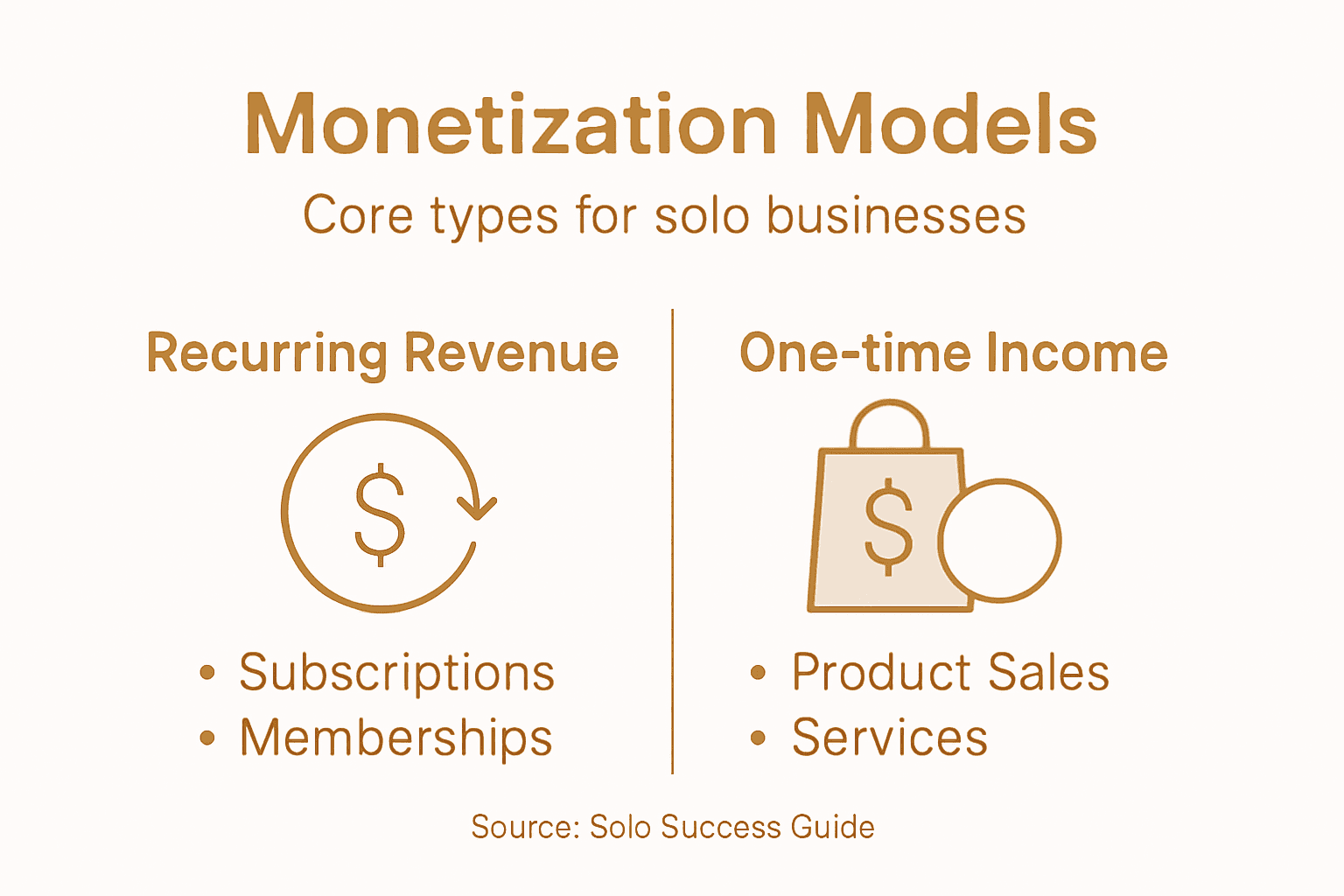
- Subscription Services: Recurring revenue through monthly or annual access
- Advertising-Based Model: Generating income through sponsored content or platform advertising
- Product Sales: Direct selling of digital or physical products
- Hybrid Models: Combining multiple revenue generation strategies
Each monetization model presents unique advantages and challenges. The subscription model, for instance, provides predictable recurring revenue, while commission-based approaches offer flexibility and scalability. Gaming industry monetization research highlights the importance of understanding audience engagement and economic viability when selecting a strategy.
Here is a comparison of common monetization models and their typical business impacts:
| Monetization Model | Revenue Predictability | Audience Engagement Level | Business Scalability |
|---|---|---|---|
| Commission-Based | Variable, depends on sales | Moderate to high | Flexible, scales with deals |
| Subscription Services | High, recurring income | Consistently high | Grows with subscriber base |
| Advertising-Based | Unpredictable, market-driven | Moderate | Scales with traffic volume |
| Direct Product Sales | Transactional, less stable | Varies | Limited by inventory/demand |
| Hybrid Models | Balanced, multiple flows | High | Maximizes diverse channels |
Successful solopreneurs often experiment with multiple models, continuously adapting their approach based on market response and audience preferences. The key is maintaining a flexible strategy that can evolve with changing digital landscapes and emerging opportunities.
Pro tip: Develop a monetization strategy that allows easy pivot between models to maximize your revenue potential.
Digital Platforms and Online Revenue Methods
Digital platforms have revolutionized how solopreneurs generate online revenue, offering unprecedented opportunities for independent entrepreneurs to monetize their skills and expertise. Digital revenue generation strategies demonstrate the complex ecosystem of online monetization methods available to modern creators.
The landscape of online revenue methods encompasses diverse approaches for solopreneurs:
- Direct Sales Platforms: E-commerce marketplaces and personal websites
- Content Monetization: Sponsored content, affiliate marketing, digital products
- Subscription-Based Services: Recurring revenue through exclusive content
- Advertising Networks: Pay-per-click and impression-based income streams
- Consulting and Service Marketplaces: Freelance and professional service platforms
Each digital platform presents unique monetization opportunities. Emerging digital revenue technologies are increasingly incorporating artificial intelligence and blockchain technologies to provide more sophisticated revenue attribution and tracking mechanisms.

Successful solopreneurs understand that platform selection is critical. They strategically choose platforms that align with their skills, target audience, and revenue goals, often leveraging multiple channels to create a robust and diversified income strategy.
Pro tip: Continuously experiment with different digital platforms to identify the most effective revenue streams for your specific skills and audience.
Strategic Revenue Streams for Personal Brands
Building a sustainable personal brand requires strategic thinking about revenue generation beyond traditional income models. Monetization strategies for content creators demonstrate the critical importance of diversifying income streams to create resilient entrepreneurial ecosystems.
Key strategic revenue streams for personal brands include:
- Sponsorship and Brand Collaborations: Partnering with aligned brands for sponsored content
- Digital Product Development: Creating online courses, ebooks, templates
- Subscription-Based Content: Exclusive memberships and premium digital offerings
- Affiliate Marketing: Earning commissions through strategic product recommendations
- Consulting and Coaching Services: Leveraging personal expertise for direct service offerings
Sustainable brand revenue strategies emphasize the importance of integrating multiple revenue channels that authentically represent the personal brand’s unique value proposition. Successful solopreneurs understand that diversification is not just about income, but about creating a comprehensive brand ecosystem.
The most effective personal brands develop revenue streams that feel natural and aligned with their core expertise, ensuring each income channel reinforces their professional identity and provides genuine value to their audience.
Pro tip: Map out your revenue streams strategically, ensuring each channel complements and amplifies your personal brand’s core narrative and expertise.
Legal, Tax, and Compliance Considerations
Navigating the complex landscape of legal and tax requirements is crucial for solopreneurs seeking sustainable business success. Tax compliance strategies reveal the intricate challenges independent entrepreneurs face in maintaining proper financial and regulatory documentation.
Key legal and compliance considerations for solopreneurs include:
- Business Registration: Selecting appropriate legal entity structure
- Tax Reporting: Understanding self-employment tax obligations
- Income Documentation: Maintaining accurate financial records
- Liability Protection: Implementing proper business insurance
- Regulatory Compliance: Adhering to local and digital platform regulations
Electronic filing systems demonstrate how technological solutions can simplify complex compliance processes for independent entrepreneurs. Successful solopreneurs proactively manage their legal and tax responsibilities, treating them as strategic business investments rather than administrative burdens.
Understanding the nuanced legal landscape requires ongoing education and potentially consulting with professional tax advisors who specialize in supporting independent businesses and digital entrepreneurs.
Use this summary as a quick reference for compliance factors essential to solopreneurs:
| Legal/Tax Area | Key Consideration | Business Benefit |
|---|---|---|
| Business Registration | Correct entity improves credibility | Simplifies contracts, protections |
| Tax Reporting | Accurate filings avoid penalties | Builds financial health |
| Income Documentation | Organized records support tax prep | Easier funding and audits |
| Liability Protection | Adequate insurance reduces personal risk | Shields personal assets |
| Regulatory Compliance | Staying updated prevents legal issues | Maintains platform access |
Pro tip: Invest in professional accounting software and schedule quarterly tax consultations to stay ahead of compliance requirements.
Mistakes Solopreneurs Make When Monetizing
Solopreneurs often stumble when attempting to transform their skills into profitable revenue streams. Common scaling challenges reveal critical mistakes that can derail monetization efforts and stunt business growth.
Key monetization mistakes solopreneurs frequently encounter include:
- Undefined Value Proposition: Failing to clearly communicate unique business value
- Inconsistent Pricing: Setting rates without strategic market research
- Limited Revenue Channels: Relying on single income stream
- Poor Financial Management: Mixing personal and business finances
- Inadequate Market Understanding: Neglecting audience needs and preferences
Financial management strategies demonstrate that many solopreneurs struggle with fundamental financial discipline. Successful entrepreneurs recognize these potential pitfalls and develop proactive strategies to mitigate risks and create sustainable income models.
Understanding these common mistakes is crucial for solopreneurs seeking to build resilient, profitable businesses. Continuous learning, adaptability, and strategic planning can transform potential obstacles into opportunities for growth and innovation.
Pro tip: Conduct a quarterly audit of your revenue streams, pricing strategy, and financial practices to identify and address potential monetization weaknesses.
Unlock Your Solo Business Potential with Proven Monetization Strategies
If you find yourself struggling to create scalable and diversified revenue streams as a solopreneur, you are not alone. Many independent entrepreneurs face challenges such as undefined value propositions, inconsistent pricing, and limited income channels. This article highlights these critical pain points and shows how adopting a flexible monetization strategy can transform your solo venture into a thriving business. With concepts like subscription models, platform diversification, and hybrid revenue streams, you can align your unique expertise with market demands for sustained growth and financial predictability.

Start applying actionable insights today by exploring our Monetize Your Expertise – Your Solo Business resources. Discover strategic planning techniques within the Business & Strategy – Your Solo Business category and learn how to expand your reach via the Grow Your Online Presence – Your Solo Business section. Don’t wait until missed opportunities stack up. Visit Your Solo Business now to build disciplined habits, develop a resilient brand, and supercharge your monetization efforts with expert guidance.
Frequently Asked Questions
What are some effective monetization strategies for solopreneurs?
Effective monetization strategies for solopreneurs include digital product creation, service-based offerings, content monetization through sponsored content and affiliate marketing, platform diversification, and skill-based micropreneurship.
How do I choose the right monetization model for my business?
To choose the right monetization model, consider your unique value proposition, audience engagement, and scalability of the model. Experimenting with different models can help you identify what works best for your specific skills and market.
Why is diversifying income streams important for solopreneurs?
Diversifying income streams is crucial for solopreneurs as it creates a comprehensive ecosystem of interconnected revenue opportunities, reducing reliance on a single source of income and increasing overall business resilience.
What common mistakes should solopreneurs avoid when monetizing?
Common mistakes include having an undefined value proposition, inconsistent pricing, reliance on a limited revenue channel, poor financial management, and inadequate understanding of the target market’s needs and preferences.
Recommended
- 7 Proven Ways to Increase Your Revenue as a Solopreneur – Your Solo Business
- 9 Proven Strategies to Make Money on Social Media – Your Solo Business
- How to Price Your Offer: The Solopreneur’s Guide – Your Solo Business