
Every creative solopreneur knows that turning ideas and talent into steady income can feel like a puzzle with moving pieces. The challenge is not just about selling products but building value-driven solutions that meet real market needs and secure long-term financial stability. Understanding modern monetization methods opens doors to multiple income streams, helping you protect your business from risk and build a thriving personal brand in any industry.
Key Takeaways
| Point | Details |
|---|---|
| Monetization Strategies | Solopreneurs can leverage diverse monetization strategies such as digital product sales and consulting to create sustainable income. |
| Value Creation Focus | Successful monetization requires a strong understanding of your unique value proposition and aligning it with market demand. |
| Legal Compliance Awareness | Navigating legal risks is crucial; solopreneurs should prioritize understanding regulations to protect their revenue streams. |
| Continuous Adaptation | Regularly review and adapt monetization strategies based on audience feedback and performance metrics to foster growth and resilience. |
Understanding Monetization And Its Core Concepts
Monetization represents the strategic process of transforming ideas, skills, and data into sustainable revenue streams for solopreneurs. At its core, monetization goes far beyond simply selling products – it’s about creating value-driven solutions that address specific market needs while generating financial returns.
The concept of monetization has evolved significantly, particularly in the digital era. Data monetization strategies now encompass multiple approaches that extend well beyond traditional transactional models. Modern solopreneurs have multiple pathways to convert their expertise into income:
- Direct product/service sales
- Information product creation
- Consulting and coaching services
- Digital content monetization
- Affiliate partnerships
- Skill-based knowledge licensing
Understanding monetization requires recognizing that value creation is the foundational element of financial success. High-performing organizations convert data into money by implementing strategic approaches that go beyond mere transactions. These approaches typically involve:
- Improving operational efficiency
- Enhancing customer experiences
- Developing information-based solutions
- Leveraging existing skills and networks
Successful monetization demands a comprehensive understanding of your unique value proposition. This means deeply analyzing your skills, market demand, and potential revenue channels that align with your expertise and audience needs.
Pro tip: Conduct a comprehensive skills audit and market research to identify your most monetizable talents before investing significant time and resources into any single strategy.
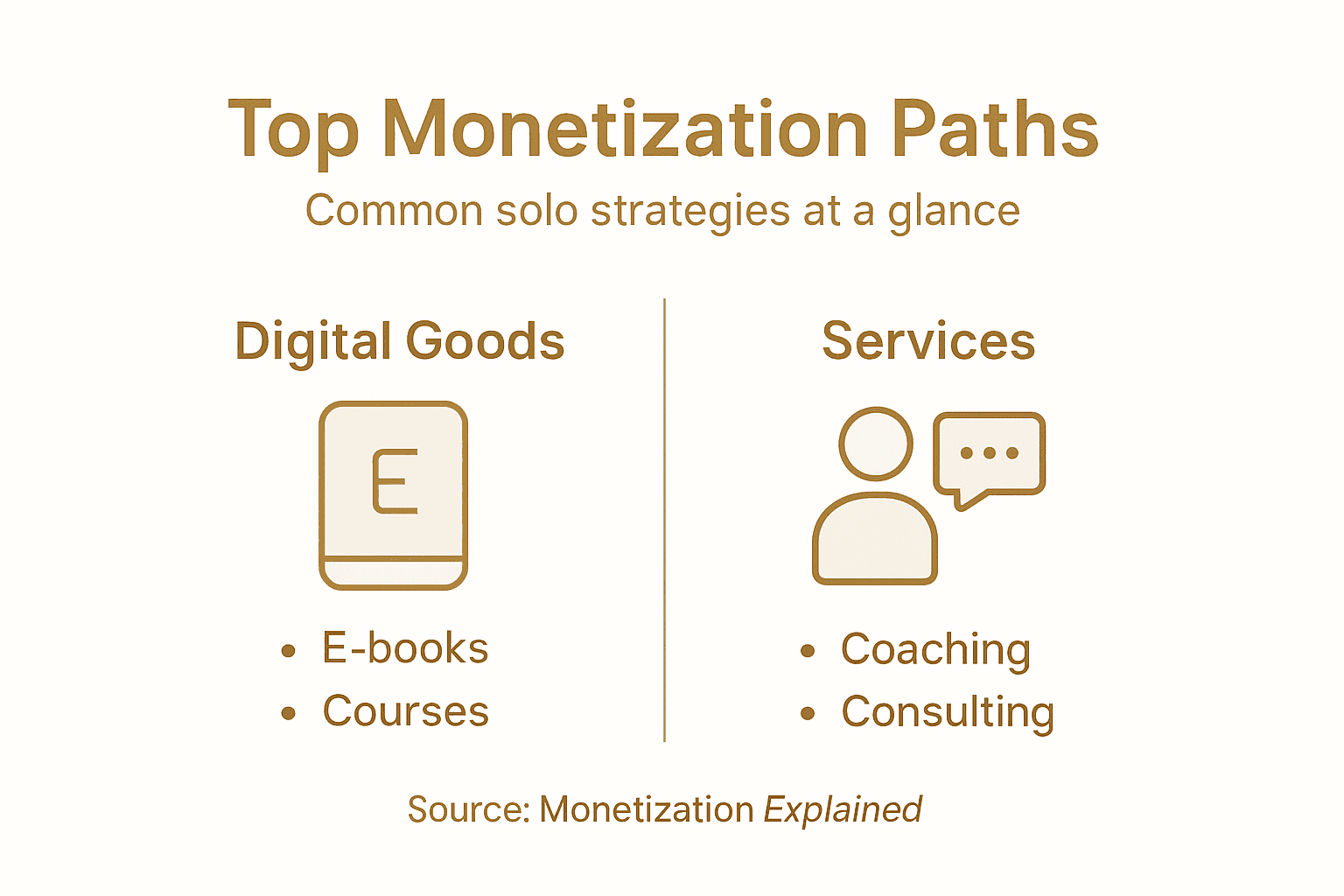
Popular Types Of Monetization For Solopreneurs
Solopreneurs have numerous monetization strategies available, each offering unique opportunities to transform their skills and expertise into sustainable income streams. Content creators leverage multiple revenue channels that go beyond traditional employment models, allowing for creative and flexible income generation.
The most popular monetization types for solopreneurs include:
- Digital Product Sales: Creating and selling online courses, ebooks, templates, and digital resources
- Membership Subscriptions: Offering exclusive content, community access, or ongoing services
- Coaching and Consulting: Providing personalized expertise and strategic guidance
- Affiliate Marketing: Earning commissions by recommending products or services
- Brand Sponsorships: Partnering with companies for targeted marketing collaborations
- Content Monetization: Generating revenue through advertising, sponsored content, and platform-specific monetization
Social media platforms enable diverse monetization strategies that empower solopreneurs to build scalable businesses. The key is developing a strategic approach that aligns with your unique skills, audience preferences, and market demand. Successful monetization requires continuous adaptation, understanding platform algorithms, and creating value-driven offerings that resonate with your target audience.
Diversifying your income streams reduces financial risk and creates multiple pathways for revenue generation.
Each monetization strategy demands a specific skill set and commitment. Some require technical knowledge, while others rely more on personal branding, networking, and audience engagement. The most successful solopreneurs often combine multiple approaches to create a robust and resilient income ecosystem.

Here’s a summary comparing popular monetization strategies for solopreneurs:
| Strategy Type | Core Focus | Technical Complexity | Scalability Potential |
|---|---|---|---|
| Digital Product Sales | Selling knowledge assets | Moderate | High, minimal delivery |
| Membership Subscriptions | Community/content access | Moderate to High | High, recurring revenue |
| Coaching & Consulting | Personalized guidance | Low to Moderate | Limited, one-to-one |
| Affiliate Marketing | Product recommendations | Low | Moderate, requires trust |
| Brand Sponsorships | Marketing partnerships | Moderate | Variable, brand-dependent |
| Content Monetization | Ads, platform features | Low to Moderate | High, audience-driven |
Pro tip: Start by mastering one monetization strategy before expanding into multiple revenue channels to maintain focus and build expertise.
How Monetization Works In The Creator Economy
Digital platforms fundamentally transform how individual creators generate income, breaking down traditional barriers between content production and revenue generation. The creator economy represents a revolutionary approach where anyone with expertise and creativity can build a sustainable business directly through digital channels.
The monetization mechanisms in this dynamic ecosystem typically include:
- Advertising revenue sharing
- Direct audience subscriptions
- Sponsored content partnerships
- Digital product sales
- Exclusive membership programs
- Crowdfunding and tip-based models
- Virtual coaching and consultation services
Creators now bypass traditional media gatekeepers by leveraging digital platforms that provide direct connections with their audience. This approach enables more personalized, authentic revenue streams that align closely with individual skills and audience interests.
The creator economy empowers individuals to transform passion into sustainable income through strategic digital engagement.
Successful monetization in this landscape requires continuous adaptation, understanding platform algorithms, and developing multiple revenue channels. Creators must remain agile, continuously learning and experimenting with different monetization strategies to build resilient income streams.
Pro tip: Develop a diversified monetization strategy that includes at least three different income streams to maximize financial stability and reduce risk.
Financial And Legal Risks Of Monetization Strategies
Monetization strategies carry substantial legal complexities that solopreneurs must carefully navigate to protect their businesses and personal financial interests. Understanding these risks is crucial for developing sustainable and compliant income streams that minimize potential legal vulnerabilities.
Key financial and legal risks for solopreneurs include:
- Data Privacy Violations: Potential breaches of consumer information protection laws
- Regulatory Non-Compliance: Failure to meet industry-specific legal requirements
- Intellectual Property Disputes: Risks of copyright and trademark infringements
- Tax Reporting Challenges: Complex obligations for tracking and reporting diverse income streams
- Contract Mismanagement: Potential legal disputes from unclear business agreements
- Platform Policy Violations: Risks of account suspension or revenue loss
Effective monetization requires robust legal frameworks that prioritize transparency, consent, and clear documentation. Solopreneurs must design their business models with meticulous attention to legal details, ensuring every revenue stream adheres to relevant regulations and ethical standards.
Legal compliance is not a one-time achievement but an ongoing process of adaptation and vigilance.
Navigating these risks demands proactive strategies, including consulting with legal professionals, maintaining comprehensive documentation, and continuously educating yourself about evolving regulatory landscapes. The most successful solopreneurs treat legal compliance as an integral part of their business strategy, not an afterthought.
Below is a reference table summarizing key financial and legal risks with recommended mitigation strategies:
| Risk Area | Example Challenge | Mitigation Strategy |
|---|---|---|
| Data Privacy | Unintentional data breach | Implement strict data safeguards |
| Regulatory Compliance | New laws affecting revenue | Regular legal consultation |
| Intellectual Property | Copyright infringement | Secure rights, use original content |
| Tax Reporting | Multi-stream tax confusion | Use specialized accounting support |
| Contract Disputes | Unclear collaboration terms | Draft clear, written agreements |
| Platform Policy Changes | Sudden account suspension | Diversify revenue channels |
Pro tip: Invest in professional legal consultation at least annually to ensure your monetization strategies remain compliant with current regulations and industry standards.
Common Mistakes And Pitfalls To Avoid
Creators frequently encounter critical monetization challenges that can derail their financial success and professional growth. Understanding these common pitfalls is essential for developing a resilient and adaptive monetization strategy that survives inevitable market fluctuations.
The most prevalent mistakes solopreneurs make include:
- Overreliance on Single Income Stream: Depending exclusively on one revenue channel
- Ignoring Audience Engagement: Prioritizing follower count over genuine connection
- Inconsistent Content Quality: Sacrificing value for quantity
- Neglecting Performance Metrics: Failing to analyze and adapt monetization strategies
- Poor Financial Planning: Not tracking expenses and revenue systematically
- Platform Dependency: Building entire business on third-party platforms
Successful solopreneurs recognize that monetization is a dynamic process requiring continuous learning and strategic adaptation. They invest time in understanding platform algorithms, diversifying income sources, and maintaining authentic audience relationships that transcend mere transactional interactions.
Sustainable monetization requires viewing your audience as a community, not just a revenue source.
Every monetization mistake presents an opportunity for growth and refinement. The most resilient creators approach challenges with curiosity, using data-driven insights to pivot and improve their strategies. Embracing a growth mindset means accepting that failures are integral to developing a robust, adaptable business model.
Pro tip: Conduct a quarterly review of your monetization strategies, analyzing performance metrics and audience feedback to identify and address potential weaknesses.
Transform Your Ideas Into Sustainable Income with Proven Monetization Strategies
If you are ready to move beyond just understanding monetization and want to turn your unique skills and ideas into consistent revenue, start with the proven strategies designed specifically for solopreneurs. This article highlights the challenges of navigating diverse monetization options like digital product sales, affiliate marketing, and audience engagement. We know it can feel overwhelming to balance value creation with legal and financial risks while building authentic connections.

Take control of your solo business journey by exploring expert insights on how to Monetize Your Expertise – Your Solo Business. Discover practical advice on crafting value-driven solutions that resonate with your audience. Strengthen your foundation with smart Business & Strategy – Your Solo Business tactics to protect your income and grow steadily. Start building your lasting success today by visiting Your Solo Business for actionable tips, community support, and guidance tailored just for solopreneurs. Don’t wait to create the income streams you deserve.
Frequently Asked Questions
What is monetization?
Monetization is the process of transforming ideas, skills, and data into sustainable revenue streams, focusing on value-driven solutions that meet market needs while generating financial returns.
What are popular monetization strategies for solopreneurs?
Common monetization strategies for solopreneurs include digital product sales, membership subscriptions, coaching, affiliate marketing, brand sponsorships, and content monetization through ads or sponsored content.
How does monetization work in the creator economy?
In the creator economy, monetization works by allowing individuals to generate income through advertising revenue, audience subscriptions, sponsored partnerships, and various digital products, bypassing traditional media gatekeepers.
What legal risks should solopreneurs consider when monetizing?
Solopreneurs should be aware of data privacy violations, regulatory non-compliance, intellectual property disputes, tax reporting challenges, contract mismanagement, and platform policy violations as these can significantly affect their monetization strategies.
Recommended
- 9 Proven Strategies to Make Money on Social Media – Your Solo Business
- 7 Proven Ways to Increase Your Revenue as a Solopreneur – Your Solo Business
- 7 Ways to Make Money With Canva as a Solopreneur – Your Solo Business
- How to Make Money Online for Beginner Solopreneurs – Your Solo Business
- How to fix high-value Gravity Forms + Stripe Payment failures – WPCTO