
70% of solopreneurs experience revenue growth within one year of business coaching. Yet many solo business owners hesitate, unsure if coaching truly delivers personalized results. This article reveals how business coaching drives measurable growth, boosts productivity through accountability, and clarifies strategic direction for freelancers and solopreneurs navigating their independent ventures.
Key Takeaways
| Point | Details |
|---|---|
| Coaching accelerates solopreneur growth | Personalized guidance targets revenue and client acquisition specifically for solo businesses. |
| Accountability and strategy are core benefits | Coaches provide external accountability and align business strategy with personal values. |
| Common myths create barriers | Many believe coaching is only for struggling businesses or guarantees instant success. |
| Selection criteria matter significantly | Choose coaches based on style, relevant experience, and measurable outcomes. |
| Real results are documented | Case studies show doubled client bases and improved productivity within months. |
Understanding Business Coaching for Solopreneurs
Business coaching provides tailored guidance distinct from general mentorship or consulting. Unlike mentorship, which often relies on informal advice from experienced peers, coaching follows structured frameworks focused on your specific goals. Consulting typically delivers solutions and tells you what to do, while coaching empowers you to discover answers through guided questioning and accountability.
For solopreneurs, this distinction matters. You face unique challenges that generic business advice cannot address.
Key challenges solopreneurs encounter include:
- Professional isolation without team feedback or brainstorming partners
- Accountability gaps when no one tracks your progress or deadlines
- Strategic uncertainty about prioritizing growth versus daily operations
- Decision paralysis from wearing every business hat simultaneously
Coaching directly targets these solo business hurdles. A coach becomes your thinking partner, helping you navigate the differences between solopreneurs and freelancers while building systems that support sustainable growth. You gain an external perspective that identifies blind spots and opportunities you miss when working alone.
The personalized nature of coaching means your sessions address your specific business model, market position, and personal working style. No two solopreneurs receive identical guidance because no two solo businesses face identical situations.
How Business Coaching Drives Measurable Growth
The 70% revenue growth statistic reflects coaching’s concrete impact on solopreneur finances. This growth stems from structured goal setting and consistent progress tracking that many solo owners struggle to maintain independently.

Coaches help you identify specific revenue targets and reverse engineer action steps. Instead of vague aspirations to “grow the business,” you develop measurable objectives like acquiring five new clients monthly or increasing average project value by 30%.
Growth areas where coaching delivers results:
- Sales process refinement and conversion rate improvement
- Marketing strategy focused on ideal client attraction
- Pricing structure optimization based on value delivery
- Client retention systems that increase lifetime value
- Strategic networking that generates qualified referrals
Consider how coaching translates to financial outcomes:
| Growth Metric | Pre-Coaching Baseline | Post-Coaching (6 Months) | Improvement |
|---|---|---|---|
| Monthly Revenue | $4,000 | $6,800 | 70% increase |
| Active Clients | 8 | 14 | 75% increase |
| Average Project Value | $500 | $850 | 70% increase |
| Client Retention Rate | 60% | 85% | 25 points higher |
These improvements rarely happen by accident. Coaches guide you through business growth concepts and help implement growth strategies for solopreneurs systematically rather than sporadically.
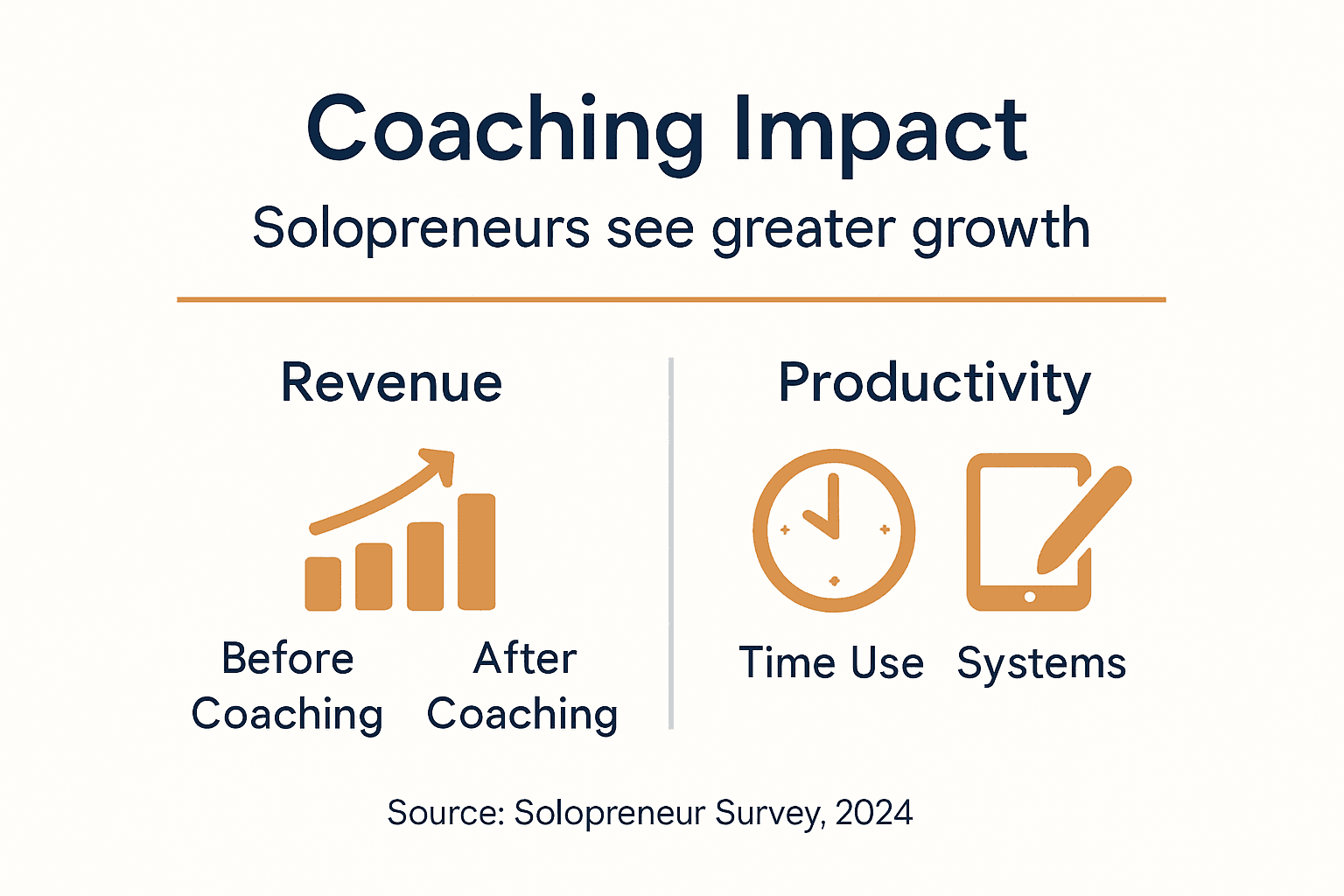
You receive feedback on what’s working and what needs adjustment. This iterative process accelerates learning and prevents months wasted on ineffective tactics. Your coach helps you recognize patterns in client behavior, market response, and operational bottlenecks that impact revenue.
Boosting Productivity Through Personalized Support
Generic productivity advice floods the internet. Coaching delivers something fundamentally different: strategies customized to your business type, work preferences, and energy patterns.
80% of freelancers report greater clarity after coaching sessions, and this clarity directly improves productivity. When you know exactly what matters most, you stop wasting time on low value activities.
Personalized productivity support includes:
- Custom workflow design matching your business delivery model
- Time blocking strategies aligned with your peak performance hours
- Priority frameworks that reflect your revenue generating activities
- Habit formation techniques suited to your personality and lifestyle
- Energy management approaches for sustainable long term output
Accountability transforms good intentions into consistent execution. You commit to specific actions during coaching sessions, knowing you’ll report progress at the next meeting. This external accountability replaces the internal discipline that’s so difficult to maintain working solo.
Your coach doesn’t just check if you completed tasks. They help you understand why certain activities feel difficult, identify obstacles preventing progress, and adjust strategies when initial approaches don’t work. This responsive support keeps you moving forward rather than stuck in unproductive patterns.
Pro Tip: Schedule coaching sessions strategically at the start of your week or month. This timing creates natural momentum and accountability for the period ahead, making you more likely to follow through on commitments.
The productivity strategies you develop with coaching become sustainable systems. You’re not just productive during intense focus sprints. You build consistent routines that maintain high output while preventing burnout.
Clarifying Strategic Direction with Coaching
Strategic confusion paralyzes many solopreneurs. You see multiple paths forward but lack clarity on which direction aligns with both market demands and your personal values.
Coaching addresses this confusion through structured exploration of your business vision, market positioning, and growth objectives. 80% of freelancers report greater clarity after coaching because coaches ask questions you haven’t considered.
Strategic clarity benefits include:
- Defined target market based on your strengths and market gaps
- Service offering structure that maximizes value and profitability
- Growth trajectory aligned with lifestyle and income goals
- Decision making framework for evaluating new opportunities
- Risk assessment tools for major business pivots
Your coach helps you distinguish between shiny object syndrome and genuine opportunities worth pursuing. This discernment prevents wasted effort on initiatives that don’t serve your strategic direction.
One solopreneur described the transformation:
“Before coaching, I said yes to every project that came my way. My coach helped me identify my ideal client profile and develop criteria for accepting work. Within three months, I was earning 40% more while working fewer hours because I focused exclusively on high value projects matching my expertise.”
Strategic clarity enables confident action. Instead of second guessing every decision, you evaluate opportunities against established criteria. This decisiveness accelerates progress and reduces the mental energy drain of constant uncertainty.
The business strategy creation process with a coach ensures your strategy remains dynamic. You revisit and adjust strategic direction as your business evolves and market conditions shift.
Common Misconceptions About Business Coaching
Misunderstandings about coaching prevent solopreneurs from accessing valuable support. Let’s correct the most damaging false beliefs.
-
Coaching is only for struggling businesses. 55% of coaching clients engage proactively for growth, not crisis management. Successful solopreneurs use coaching to reach the next level, not rescue failing ventures.
-
Coaching replaces self learning and mentorship. Wrong. Coaching complements these development methods by providing accountability and personalized application of knowledge you gain elsewhere.
-
Results happen immediately without effort. Coaching accelerates progress but doesn’t eliminate the need for consistent work. You still implement strategies and face market realities.
-
All coaches use identical approaches. Coaching styles vary dramatically. Some coaches focus heavily on mindset, others emphasize systems and processes. Finding the right match matters enormously.
-
Expensive coaching automatically delivers better results. Price doesn’t guarantee value. Evaluate coaches based on relevant experience, methodology fit, and demonstrated outcomes with similar clients.
-
You need perfect clarity before starting coaching. Many solopreneurs begin coaching precisely because they lack clarity. Good coaches help you develop direction through the coaching process itself.
Pro Tip: Request a discovery session before committing to coaching. This conversation reveals coaching style, communication approach, and whether the coach understands your specific business context and challenges.
Understanding what coaching actually provides versus these misconceptions helps you set realistic expectations. You approach coaching as a collaborative partnership requiring your active participation, not a passive solution someone implements for you.
How Business Coaching Differs from Other Support Options
Choosing between coaching, mentorship, consulting, and self learning confuses many solopreneurs. Each serves different purposes.
87% of coached solopreneurs report insights beyond self study or mentorship because coaching’s structured accountability and personalized feedback fill gaps other methods leave.
| Support Type | Structure | Focus | Accountability | Best For |
|---|---|---|---|---|
| Self Learning | Flexible, self directed | Knowledge acquisition | Internal only | Building foundational understanding |
| Mentorship | Informal, relationship based | Advice from experience | Minimal external | Learning from someone’s specific journey |
| Consulting | Project based, directive | Problem solving and implementation | Deliverable focused | Technical solutions and specialized expertise |
| Coaching | Structured sessions, collaborative | Goal achievement and growth | Strong external | Sustained behavior change and strategic execution |
Self learning gives you information but lacks external accountability. You consume content without necessarily applying it or receiving feedback on implementation.
Mentorship provides valuable perspective but typically lacks the structured frameworks and consistent check ins that drive measurable progress. Mentors share what worked for them, which may not directly translate to your situation.
Consulting delivers expert solutions but doesn’t develop your own strategic thinking capabilities. Consultants often implement for you rather than building your capacity to solve similar problems independently.
Coaching occupies a unique middle ground. Your coach doesn’t tell you what to do like a consultant, but provides more structure and accountability than mentorship or self learning. You develop both strategic thinking skills and implementation discipline.
The questioning approach coaches use helps you discover solutions tailored to your specific circumstances. This discovery process builds confidence and decision making ability that transfers to future challenges.
How to Choose the Right Business Coach
Selecting a coach requires more consideration than browsing websites and picking someone with impressive credentials. The right coach matches your working style, understands your business context, and uses methodology aligned with your learning preferences.
Evaluation criteria for coach selection:
- Relevant experience coaching solopreneurs in your industry or business model
- Clear methodology explaining how coaching sessions are structured
- Demonstrated outcomes through client testimonials and case studies
- Communication style that resonates with your preferences
- Practical understanding of solo business challenges beyond theory
- Coaching certifications from recognized programs
- Availability and session frequency matching your needs
- Transparent pricing and engagement terms
Ask potential coaches specific questions during discovery calls. How do you tailor coaching to solopreneurs versus larger businesses? What metrics do you use to track client progress? How do you handle situations when clients aren’t implementing agreed upon actions?
Their answers reveal coaching philosophy and whether they take accountability seriously. Vague responses about “supporting your journey” without concrete frameworks signal potential misalignment.
Consider delivery format carefully. Online coaching offers flexibility and typically costs less. In person coaching provides deeper connection but requires geographic proximity and schedule coordination. Group coaching reduces cost while adding peer perspectives but provides less individualized attention.
Your investment should reflect both coaching fees and your time commitment. Calculate the total cost including session preparation, implementation hours, and any additional resources required.
Trust your instincts about chemistry. Even technically qualified coaches won’t deliver results if you don’t feel comfortable being vulnerable about challenges and receiving direct feedback.
Real World Coaching Success Stories
Abstract benefits become concrete through examples of actual solopreneur transformations.
Marketing consultant Sarah struggled with inconsistent income despite strong skills. Her coach helped identify that poor client qualification and unclear service packaging created the volatility. Within six months of implementing a structured qualification process and tiered service offerings, Sarah doubled her client base while increasing average project value by 60%. Her revenue stabilized with predictable monthly income.
Graphic designer Marcus felt overwhelmed managing projects, marketing, and administration simultaneously. His coach introduced time blocking aligned with energy levels and helped delegate administrative tasks to virtual assistants. Marcus reported 40% productivity improvement within three months, completing projects faster while maintaining quality. The additional capacity allowed him to accept more clients without extending work hours.
Business consultant Jennifer wanted to transition from hourly billing to value based pricing but feared losing clients. Her coach guided strategic repositioning focused on outcomes rather than time. Through carefully scripted client conversations and phased price increases, Jennifer raised rates by 50% over eight months while retaining 90% of existing clients. Her income increased substantially while working fewer billable hours.
These examples share common patterns. Coaches helped identify specific obstacles preventing progress, developed customized strategies addressing those barriers, and provided accountability ensuring consistent implementation. The solopreneurs did the actual work, but coaching structured their efforts for maximum impact.
Successful coaching engagements require your active participation. You implement strategies between sessions, honestly assess what’s working, and adjust approaches based on feedback. The coach provides framework and accountability, but you drive the transformation.
Discover Personalized Coaching and Growth Resources
The coaching insights you’ve gained here represent just the starting point for your solo business growth journey. Your Solo Business offers integrated resources extending these benefits through practical tools and actionable strategies.
Our business strategy guide walks you through creating strategic direction aligned with your values and market opportunities. The productivity toolkit provides systems for sustained high performance without burnout. Learn to amplify your professional presence through personal branding on LinkedIn to attract ideal clients consistently.
Whether you’re considering coaching or implementing strategies independently, these resources help you build the thriving solo business you envision. Start exploring the tools that address your most pressing challenges today.
Frequently Asked Questions About Business Coaching
What exactly does a business coach do for solopreneurs?
A business coach provides structured guidance helping solopreneurs set clear goals, develop strategies for achieving them, and maintain accountability for consistent progress. Unlike consultants who solve problems for you, coaches ask powerful questions that help you discover solutions tailored to your specific business context. They offer objective perspective on challenges, help identify blind spots, and create frameworks for better decision making.
How long before I see results from business coaching?
Most solopreneurs notice initial improvements within 4 to 6 weeks as they implement new strategies and build productive habits. Significant measurable outcomes like revenue growth typically appear within 3 to 6 months of consistent coaching engagement. The timeline depends on your starting point, implementation consistency, and specific goals. Quick wins in clarity and productivity often precede longer term financial results.
Can I combine coaching with mentorship or self learning?
Absolutely. Coaching works best when complementing other development methods rather than replacing them. Self learning builds your knowledge base, mentorship provides industry specific insights, and coaching ensures you actually apply what you learn through accountability and personalized implementation support. Many successful solopreneurs use all three approaches simultaneously for comprehensive growth.
What qualifications should I look for in a coach?
Prioritize relevant experience coaching solopreneurs in your industry or business model over generic certifications. Look for coaches with recognized training from programs like ICF or similar organizations, but also evaluate their practical business understanding. Client testimonials demonstrating measurable outcomes matter more than impressive credentials alone. The coach should understand solo business challenges from direct experience, not just theory.
Is coaching worth the investment for a solo business?
Coaching delivers strong ROI when you actively implement strategies and maintain consistent engagement. The 70% of solopreneurs experiencing revenue growth within one year typically see returns far exceeding coaching fees. However, coaching requires your time investment beyond session costs. Evaluate whether you’re ready to commit to implementation, not just attend sessions. If you consistently apply guidance, coaching accelerates growth that would take years to achieve independently.