
Many solopreneurs think coaching is generic business advice, but that’s a costly misunderstanding. Solopreneur coaching targets solo business challenges like isolation, resource constraints, and brand clarity with specialized strategies. This guide explains how coaching drives measurable growth through personalized strategy, productivity frameworks, and branding, plus how to choose the right coach. You’ll discover why coaching isn’t a quick fix but a sustainable path to building authority and achieving consistent progress in your independent venture.
Key takeaways
| Point | Details |
|---|---|
| Tailored approach | Solopreneur coaching addresses unique solo challenges with customized strategies for strategy, branding, and productivity. |
| Measurable results | Coaching boosts business growth by 25% and task completion by 30% within 12 months on average. |
| Branding focus | Personal branding clarity improves client engagement and positions you as an authority in your niche. |
| Sustainable success | Coaching emphasizes long-term growth over quick wins, building resilient business practices. |
| Coach selection | Experience with solopreneurs, methodology fit, and personal rapport determine coaching success. |
Definition and core concepts of solopreneur coaching
Solopreneur coaching is specialized support designed exclusively for solo business owners navigating the distinct pressures of running an enterprise alone. Unlike general business coaching that addresses team dynamics or corporate growth, solopreneur coaching focuses on solo business challenges such as strategic planning without partners, building personal authority, and managing productivity without delegation. It’s about creating frameworks that work when you’re the CEO, marketer, and operations manager rolled into one.
The core focus areas include business strategy tailored to solo constraints, personal branding that positions you as a trusted authority, and productivity systems that prevent burnout. Coaches help you design revenue models that don’t require massive teams, clarify your unique value proposition, and build client relationships that sustain long-term growth. This differs fundamentally from what is solopreneurship as a concept because coaching provides accountability and personalized guidance rather than general information.
Dedicated online platforms now offer solopreneur coaching, recognizing that solo entrepreneurs face isolation and resource limitations that traditional coaching overlooks. These services fit into growing solopreneur ecosystems by providing structured support for independent professionals who need expert insight without corporate overhead.
Key elements of effective solopreneur coaching include:
- Customized business models that scale without teams
- Brand positioning strategies for solo experts
- Time management frameworks that honor work-life balance
- Revenue diversification tailored to individual strengths
- Accountability structures that combat isolation
Benefits and impact of solopreneur coaching
The numbers tell a compelling story. Research shows coaching delivers 25% business growth and 30% higher task completion within a year. These aren’t vague improvements but measurable shifts in revenue, client acquisition, and project completion rates that directly impact your bottom line.
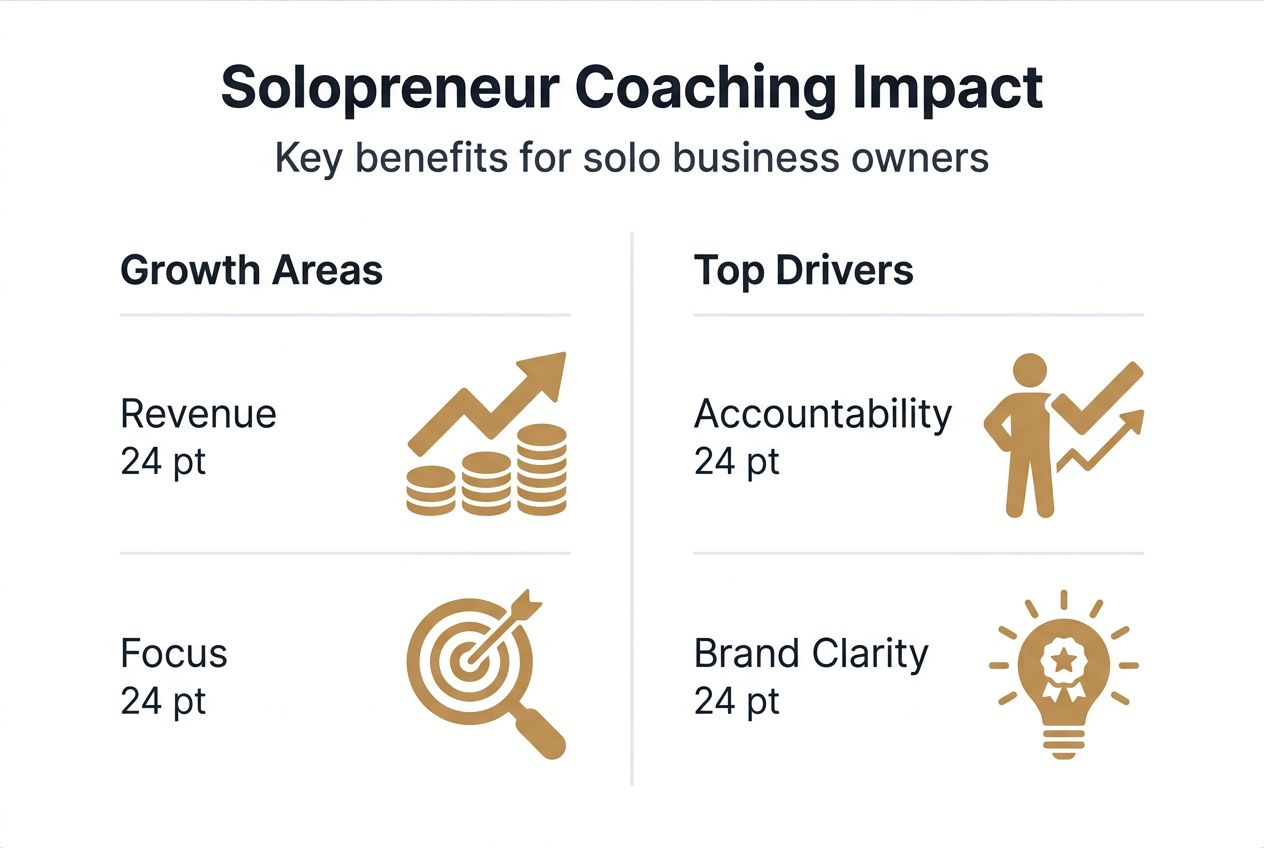
Accountability drives much of this success. When you commit to specific goals with a coach, you’re 42% more likely to achieve them compared to working alone. Personalized frameworks help you prioritize high-impact activities, eliminate time drains, and build systems that compound results over time. This structured approach prevents the reactive firefighting that exhausts many solopreneurs.
Coaching emphasizes sustainable growth, not overnight success. You learn to build resilient business practices that weather market shifts and personal challenges. This long-term perspective improves both business metrics and personal wellbeing, reducing the stress and isolation that plague solo entrepreneurs.
| Metric | Before Coaching | After 12 Months |
|---|---|---|
| Average revenue growth | Baseline | +25% |
| Task completion rate | Baseline | +30% |
| Burnout indicators | High | Reduced 40-60% |
| Brand clarity score | Moderate | +70% |
Discover more about business coaching benefits and how they translate to practical outcomes. The solopreneur business planning guide offers additional frameworks for implementing coaching insights.
Pro Tip: Schedule monthly progress reviews with your coach to adjust strategies based on real data. Consistent evaluation catches issues early and amplifies what’s working, maximizing your return on coaching investment.
Common misconceptions about solopreneur coaching
Many solopreneurs hold beliefs about coaching that prevent them from engaging effectively. Clearing these misconceptions opens the door to genuine transformation and realistic expectations.
-
Solopreneur coaching is just rebranded general business coaching. False. While both involve strategy and goal setting, solopreneur coaching specifically addresses solo challenges like isolation and resource constraints. General coaching often assumes team dynamics and capital access that don’t apply to solo ventures.
-
Coaching guarantees immediate financial success. Reality check: coaching accelerates progress but requires your active participation and time. Many solopreneurs inaccurately believe coaching guarantees quick financial success, setting themselves up for disappointment. Sustainable growth takes months, not weeks, even with expert guidance.
-
Personal branding is a minor side benefit. Wrong again. Brand clarity is central to solopreneur coaching because your personal authority directly drives client trust and premium positioning. Without a strong brand, you compete on price alone, which erodes profitability.
-
Any business coach can work with solopreneurs. Not quite. Coaches experienced with corporate clients may struggle to understand solo constraints like wearing multiple hats simultaneously or managing cash flow without investors. Specialized solopreneur coaches recognize these unique dynamics.
-
Coaching is only for struggling businesses. Actually, successful solopreneurs use coaching to scale intelligently and prevent future problems. Proactive guidance helps you avoid the solopreneur pitfalls that derail even promising ventures.
Setting realistic expectations improves coaching outcomes dramatically. Understand that coaching provides tools, accountability, and expertise, but you implement the work. The combination of expert guidance and your committed action creates results.
Role of personal branding in solopreneur coaching
Personal branding isn’t vanity; it’s your competitive advantage as a solopreneur. When you’re the face of your business, brand clarity directly impacts client acquisition, pricing power, and long-term sustainability. Coaching helps you define, refine, and project a brand that resonates with your ideal clients.

Over 70% of solopreneurs improve brand clarity through coaching, leading to stronger client connections and higher conversion rates. This happens because coaches help you identify your unique voice, values, and positioning rather than mimicking competitors. You learn to communicate what makes you different in ways that attract aligned clients who value your specific expertise.
Effective branding techniques include storytelling that humanizes your expertise, consistent messaging across platforms, and visual identity that reflects your professional standards. Coaches guide you through exercises that uncover your authentic brand essence, then help translate that into practical marketing assets.
Brand strength also affects pricing. When clients perceive you as an authority, they’re willing to pay premium rates for your time and insights. This shifts you from competing on price to competing on value, which is essential for profitable solo businesses. Coaching integrates branding with productivity and strategic planning so your brand supports rather than distracts from revenue generation.
Key branding elements coaches help develop:
- Clear value proposition that differentiates you from competitors
- Consistent visual and verbal identity across all touchpoints
- Content strategy that demonstrates expertise and builds trust
- Networking approach aligned with your brand positioning
- Client experience that reinforces your brand promise
Learn practical techniques for building personal brand on LinkedIn to complement your coaching work.
Case studies illustrating coaching benefits
Real examples show how coaching translates theory into measurable business improvements. These cases demonstrate the range of benefits from revenue growth to personal wellbeing.
An early-stage marketing consultant struggled with positioning and pricing. After six months of coaching focused on brand clarity and strategic planning, she increased revenue by 35% while working fewer hours. The coach helped her identify a profitable niche, raise rates confidently, and create repeatable service packages that attracted ideal clients. Her story illustrates how strategic clarity drives revenue even for newer solopreneurs.
A seasoned freelance designer faced severe burnout from taking every project and working 70-hour weeks. Coaching introduced time management frameworks and boundary-setting techniques that reduced burnout indicators by 60% within four months. He learned to qualify clients upfront, implement project minimums, and schedule recovery time without guilt. Research confirms clients experience up to 40% revenue increase and 60% burnout reduction within six months of focused coaching.
Key success factors in both cases:
- Customized approaches matching individual business models and personalities
- Regular accountability check-ins that maintained momentum
- Practical tools implemented immediately rather than abstract advice
- Branding refinement that attracted better-fit clients
- Mindset shifts around pricing, boundaries, and sustainable growth
“Coaching didn’t just improve my business numbers. It gave me permission to build a company that supports my life instead of consuming it. The frameworks I learned continue driving results two years later.” — Designer case study participant
Explore more business coaching case studies to see diverse applications across industries and business stages.
Conceptual framework for understanding solopreneur coaching
The GROW model, adapted for solo businesses, provides a structured approach to coaching conversations and personal strategic planning. Understanding this framework helps you maximize coaching value and apply insights independently between sessions.
-
Goal: Define specific, measurable objectives for your solo business. Rather than vague aims like “grow revenue,” you identify targets such as “add three retainer clients at $3,000 monthly by Q2.” Solopreneur coaches help ensure goals align with your capacity and lifestyle preferences, not just financial targets.
-
Reality: Assess your current situation honestly, including resources, constraints, and market position. This step prevents wishful thinking by examining what’s actually true about your business right now. Solo entrepreneurs often skip this reality check, leading to strategies that don’t fit their circumstances.
-
Options: Explore multiple pathways to achieve your goals, considering your unique strengths and limitations. Coaches facilitate brainstorming that generates creative solutions you might not see alone. This stage emphasizes possibility without immediate commitment.
-
Will: Commit to specific actions with accountability mechanisms. You choose which options to implement, create timelines, and identify potential obstacles. This transforms planning into execution with clear next steps.
| GROW Step | Solopreneur Focus | Example Question |
|---|---|---|
| Goal | Lifestyle-aligned targets | What revenue supports your ideal work-life balance? |
| Reality | Resource constraints | What time and budget do you actually have available? |
| Options | Solo-appropriate strategies | Which approaches don’t require a team to execute? |
| Will | Personal accountability | What specific action will you take this week? |
This framework guides clearer progress by preventing common pitfalls like setting unrealistic goals or skipping reality assessments. It’s particularly valuable for solopreneurs who lack external accountability structures that employees experience naturally.
Pro Tip: Conduct monthly GROW self-assessments even without a coach present. Regular reality checks prevent gradual drift from your strategic priorities and catch problems before they become crises.
The business planning guide 2026 incorporates similar frameworks for comprehensive strategic thinking.
Selecting a solopreneur coach
Choosing the right coach dramatically affects your success likelihood. 80% of coaching engagement success depends on coach experience, methodology alignment, and personal rapport. These factors matter more than credentials or pricing alone.
Start by evaluating track records specifically with solopreneurs. A coach successful with corporate teams may not understand solo constraints like managing cash flow without investors or building systems without staff. Ask potential coaches about their experience with businesses similar to yours in size, industry, and growth stage.
Methodology fit determines whether coaching feels natural or forced. Some coaches use highly structured programs while others adapt fluidly to emerging needs. Consider your learning style and business phase when assessing approaches. A startup solopreneur might need more structure, while an established one might prefer flexible exploration.
Personal rapport can’t be overrated. You’ll share challenges, frustrations, and aspirations with this person, so chemistry matters. Schedule discovery calls with multiple coaches to assess communication style, energy, and whether you feel heard. Trust your instincts about who creates space for honest conversation.
Signs of effective coach partnerships:
- Coach asks probing questions rather than immediately offering solutions
- You feel challenged but supported, not judged
- Conversations generate new insights and perspective shifts
- Action items are clear, achievable, and directly tied to your goals
- Coach tracks progress and adjusts approach based on results
Pro Tip: Prepare three specific solo business challenges before coach selection calls. Notice which coaches ask clarifying questions about your unique situation versus those who jump to generic advice. The former indicates customized thinking.
Find additional guidance on choosing a business coach that complements these selection criteria.
Explore resources to grow your solo business
You’ve learned how coaching accelerates solo business growth through tailored strategy, branding, and accountability. Now take the next step by exploring resources designed specifically for independent entrepreneurs like you.
Strengthen your market position with proven techniques for building your personal brand on LinkedIn, where your ideal clients already spend time. Apply strategic frameworks from our solopreneur business planning guide to translate coaching insights into actionable plans. Discover diverse monetization strategies for solopreneurs that align with your expertise and lifestyle goals. These resources complement coaching by providing practical tools you can implement immediately to build sustainable success in your independent venture.
Frequently asked questions about solopreneur coaching
What exactly is solopreneur coaching and what does it focus on?
Solopreneur coaching is specialized guidance for solo business owners addressing unique challenges like isolation, resource constraints, and personal brand development. It focuses primarily on business strategy, productivity systems, and positioning that work without teams or significant capital.
How does solopreneur coaching differ from mentorship or consulting?
Coaching asks questions to help you discover solutions and builds your decision-making capacity. Mentorship typically involves an experienced person sharing their specific path, while consulting provides expert recommendations. Coaching emphasizes your growth and sustainable skills rather than quick fixes.
How do I know if solopreneur coaching is right for me?
Consider coaching if you feel stuck despite effort, struggle with accountability, want to scale intelligently, or need objective perspective on business decisions. It’s particularly valuable when you’ve outgrown DIY approaches but aren’t ready to hire employees. Coaching works best when you’re willing to implement feedback and invest time in growth.
What do typical solopreneur coaching sessions look like and how long do they last?
Sessions usually run 45 to 60 minutes, occurring weekly or biweekly via video call. Coaches review progress on previous commitments, explore current challenges, and collaboratively design action steps. Most engagements last three to twelve months, allowing time for meaningful implementation and habit formation.
How can I measure if coaching is actually working for my business?
Track specific metrics before and during coaching such as revenue, client acquisition rate, project completion time, and personal wellbeing indicators. Effective coaching produces measurable improvements in these areas plus intangible benefits like clarity and confidence. Request regular progress reviews with your coach to assess whether you’re moving toward defined goals.





Leave a Reply