
Running a solo business sounds liberating, but 70% of solo founders fail within two years, compared to just 40% of founding teams. The gap isn’t about talent or ideas. Solo entrepreneurs face unique psychological and operational pressures that sabotage even the most passionate founders. Understanding these hidden failure causes and adopting strategic resilience practices can dramatically shift the odds in your favor.
Key takeaways
| Point | Details |
|---|---|
| Psychological burnout drives most failures | Burnout reduces productivity by 50% and fuels chronic stress, isolation, and decision fatigue among solo founders. |
| Operational overload kills businesses early | 20% of solo businesses fail within year one due to trying to handle every task alone without outsourcing. |
| Discipline beats motivation for success | Quitting too soon is more common than skill gaps, and steady commitment outperforms bursts of enthusiasm. |
| Common myths hinder effective practices | Believing passion alone guarantees success or that solo means doing everything yourself creates avoidable failure traps. |
| Strategic planning and support prevent collapse | Clear business plans, outsourcing non-core tasks, and peer networks build resilience and sustainable growth. |
The unique psychological and emotional challenges of solo entrepreneurship
Solo entrepreneurs carry the entire weight of their business alone. This creates mental health risks that teams can distribute and manage collectively. Psychological traps impede success as powerfully as poor execution or flawed strategy.
Isolation amplifies stress. Without co-founders to share decision-making, solo business owners face relentless choice fatigue. Every product tweak, marketing angle, and financial decision lands on one person. This chronic pressure wears down resilience fast.
Identity crises emerge during scaling phases. When your business is you and you are your business, separating self-worth from revenue becomes nearly impossible. A slow quarter feels like personal failure. This emotional entanglement causes many solopreneurs to stagnate rather than adapt.
Cognitive overload is real and measurable. Studies show that constant context switching between marketing, operations, sales, and admin work reduces focus and output quality. You’re not just tired; your brain is genuinely impaired by managing too many domains simultaneously.
Understanding these psychological challenges of solo entrepreneurship helps you recognize warning signs early:
- Chronic decision fatigue leading to procrastination or paralysis
- Feelings of impostor syndrome intensifying during setbacks
- Reluctance to pivot due to emotional attachment to original vision
- Physical symptoms like insomnia, headaches, or digestive issues from sustained stress
“The loneliness of solo entrepreneurship isn’t just emotional. It creates blind spots. Without trusted peers to challenge assumptions, bad decisions compound quietly until it’s too late.”
Recognizing these patterns allows you to build countermeasures before they derail your business.
Common operational and strategic mistakes solo entrepreneurs make
Beyond mental health, practical missteps destroy otherwise viable solo businesses. Many founders dive in with passion but skip essential groundwork that prevents early collapse.
Lack of clear business planning is the silent killer. Without a structured roadmap, businesses drift. You chase every shiny opportunity, dilute your focus, and burn resources on low-impact activities. A plan clarifies your target market, revenue model, and key milestones, giving you something concrete to execute against.
Trying to do everything yourself seems cost-effective but accelerates failure. Legal missteps, tax errors, or branding inconsistencies pile up when you’re juggling roles you’re unqualified for. Successful solo businesses invest in 2-3 freelance professionals minimum to reduce overwhelm.

Operational overload compounds quickly. You start strong, then realize you’re spending 60% of your week on admin tasks, not revenue-generating work. Without systems to automate or delegate repetitive processes, you hit a ceiling fast.
| Mistake | Impact | Solution |
|---|---|---|
| No pre-launch planning | Business drifts without focus | Develop benefits of business planning before launch |
| Handling all tasks alone | Burnout and critical errors | Outsource legal, financial, and design work |
| Ignoring cash flow management | Sudden insolvency | Track expenses weekly, maintain 3-month buffer |
| Skipping market validation | Building products nobody wants | Test with small audience before scaling |
These mistakes aren’t inevitable. They’re patterns you can disrupt with intentional business strategy for solopreneurs and disciplined execution.
Pro Tip: Block one full day monthly for strategic review. Assess what’s working, what’s draining resources, and where you need outside help. This simple rhythm prevents drift and keeps you aligned with core goals.
The importance of persistence and discipline over motivation
Motivation fades. Discipline endures. This distinction separates successful solo entrepreneurs from those who quit during the inevitable rough patches.
Entrepreneurs who combine passion with persistence and strategic time management dramatically increase their success odds. Passion ignites the start, but persistence carries you through market shifts, customer complaints, and revenue dips.
Most people misunderstand how success actually happens. They see the highlight reel of overnight wins and assume talent or luck drove it. Reality is unglamorous. Successful founders show up consistently, refine their approach, and push through resistance that stops most people.
Steady discipline outperforms bursts of motivation because motivation is inherently unstable. You can’t control when inspiration strikes. You can control your daily habits and commitments.
Consider these realities:
- Early-stage entrepreneurs often work 60-80 hour weeks building foundations
- Most “overnight successes” took 5-10 years of consistent, invisible effort
- Setbacks are guaranteed; persistence determines whether you learn or quit
- Discipline creates momentum that eventually feels easier than stopping
The trap is waiting to feel motivated before taking action. Professionals act first, then motivation follows. Amateurs wait for the perfect mood and never build traction.
Building discipline habits for solopreneurs starts with small, non-negotiable commitments. Ship one piece of content weekly. Reach out to three potential clients daily. Review financials every Friday. These mundane routines compound into transformative results.
“I don’t rely on motivation anymore. I have systems. On hard days, the system runs me. That’s the difference between a hobby and a business.”
When you internalize this mindset shift, obstacles become data points rather than reasons to quit.
Common misconceptions about why solo entrepreneurs fail
Misunderstandings about what drives success create avoidable traps. Correcting these myths helps you focus energy on what actually moves the needle.
Myth 1: Passion alone guarantees success. Reality: Passion without strategic execution and persistence leads nowhere. You need market fit, operational discipline, and resilience to translate enthusiasm into revenue.
Myth 2: Solo entrepreneurs should handle everything themselves. Reality: Doing everything alone leads to failure. Smart solopreneurs outsource tasks outside their core competency to focus on high-value activities.
Myth 3: Motivation sustains a business long-term. Reality: Steady discipline drives success, not fleeting bursts of inspiration. Consistent habits beat emotional highs every time.
Myth 4: You need a perfect idea before starting. Reality: Execution and iteration matter more than the initial concept. Most successful businesses evolved significantly from their original vision based on market feedback.
| Myth | Reality | Action |
|---|---|---|
| Passion = guaranteed success | Passion needs strategy and persistence | Pair enthusiasm with discipline habits for solopreneurs |
| Do everything yourself | Specialists improve quality and speed | Hire freelancers for legal, financial, design work |
| Motivation sustains growth | Discipline creates consistency | Build daily routines independent of mood |
| Perfect idea required first | Iteration beats perfection | Launch minimal version, refine based on feedback |
These myths persist because they sound inspiring. The truth is less glamorous but far more empowering. You don’t need superhuman motivation or a flawless concept. You need clarity, discipline, and strategic support.
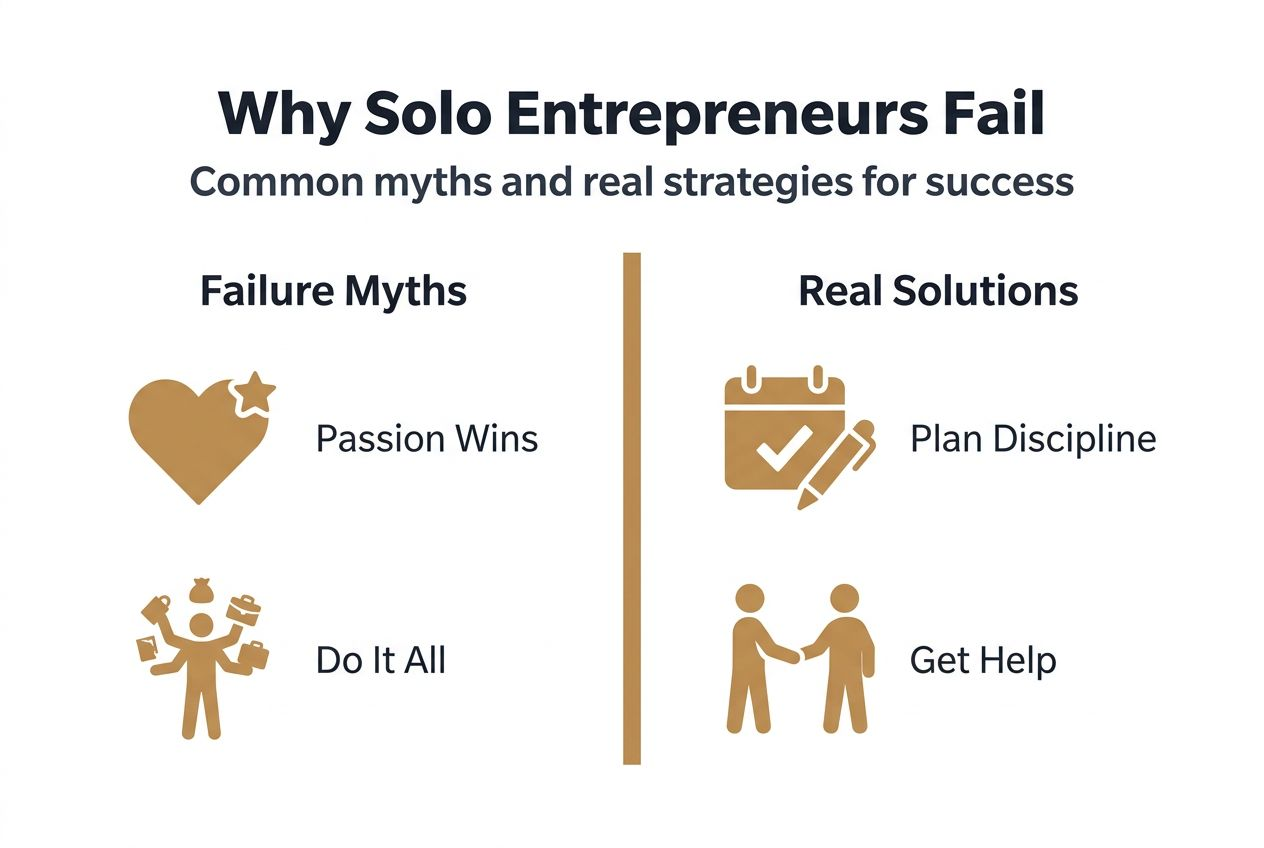
Pro Tip: When you catch yourself thinking “I just need to feel more motivated,” reframe it as “What’s one small action I can take right now?” Action creates momentum that feels like motivation after the fact.
Practical strategies to avoid failure and build resilience as a solo entrepreneur
Knowing the failure patterns is useful only if you act on countermeasures. These evidence-based strategies directly address the psychological and operational challenges that sink most solo businesses.
-
Adopt disciplined daily routines. Set non-negotiable blocks for deep work, customer outreach, and strategic planning. Consistency compounds into exponential results over months and years.
-
Develop a clear business plan before launch. Group similar tasks to reduce decision fatigue and establish your value proposition, target audience, revenue streams, and growth milestones in writing. Use this solopreneur business planning guide to structure your thinking.
-
Outsource legal, financial, and repetitive tasks immediately. Don’t wait until you’re drowning. Hire a bookkeeper, tax professional, and virtual assistant within your first quarter. This frees cognitive bandwidth for revenue-generating activities.
-
Batch similar tasks to minimize context switching. Dedicate specific days or time blocks to content creation, client calls, admin work, and strategy. Jumping between contexts destroys focus and amplifies mental fatigue.
-
Build peer support networks proactively. Join mastermind groups, online communities, or local entrepreneur meetups. Regular interaction with people facing similar challenges reduces isolation and provides accountability.
-
Prioritize mental health practices. Schedule breaks, exercise, and genuine rest. Burnout doesn’t announce itself until it’s severe. Preventive habits protect your most valuable asset: your capacity to execute.
-
Review and adjust strategy quarterly. Use insights from key insights solo entrepreneur failure and business growth tips 2026 to identify what’s working and what needs refinement. Flexibility prevents stubborn attachment to failing approaches.
-
Set realistic milestones and celebrate progress. Breaking big goals into weekly wins maintains motivation and provides evidence that your efforts are accumulating toward meaningful outcomes.
Implementing even three of these strategies significantly improves your resilience and success probability. The key is starting small and building consistency before adding complexity.
Pro Tip: Track your weekly wins in a simple spreadsheet. On discouraging days, reviewing past progress reminds you how far you’ve come and reinforces that persistence pays off.
Conclusion and next steps for solo entrepreneurs
Failure among solo entrepreneurs is common but not inevitable. The 70% failure rate reflects patterns you can disrupt with awareness and intentional practice. Psychological challenges like burnout and isolation are real, but strategic planning, disciplined habits, and peer support provide powerful countermeasures.
Long-term persistence matters more than initial motivation. Combining passion with realistic planning and consistent execution dramatically shifts the odds in your favor. Avoid the trap of doing everything alone. Invest in professional help for tasks outside your expertise.
Your solo business can thrive when you prioritize sustainable practices over hustle culture myths. Take the insights here and apply them systematically. Small, consistent improvements compound into transformative results.
Support your solo business journey with expert resources
Building a resilient solo business requires more than passion. You need actionable frameworks, strategic tools, and proven guidance to avoid common pitfalls and accelerate growth.

Your Solo Business offers comprehensive resources designed specifically for solopreneurs navigating these challenges. Explore the solopreneur business planning guide to create a clear roadmap before you launch or refine your existing strategy. Strengthen your market presence with insights on personal branding on LinkedIn to attract ideal clients consistently. Access business growth tips 2026 to stay ahead of trends and implement strategies that drive sustainable revenue. These tools translate the concepts in this article into concrete steps you can execute immediately, giving you the strategic advantage most solo entrepreneurs lack.
FAQ
Why do so many solo entrepreneurs fail?
Failure stems primarily from psychological burnout and operational overload, not insufficient skills or weak ideas. Isolation increases chronic stress and decision fatigue, while trying to handle every business function alone creates overwhelm. Without peer support or strategic outsourcing, even talented founders quit before reaching profitability.
How can solo entrepreneurs overcome feelings of isolation?
Join peer mastermind groups or online communities where other solopreneurs share challenges and solutions. Schedule regular networking calls or co-working sessions to create accountability and social connection. Prioritize mental health practices like exercise, mindfulness, and genuine rest to combat the emotional toll of working alone. These proactive steps transform isolation from a weakness into manageable background noise.
Is passion enough to succeed as a solo entrepreneur?
Passion ignites the start but won’t sustain you through inevitable setbacks and slow periods. You must pair enthusiasm with strategic planning, consistent execution, and disciplined habits. Successful solopreneurs combine their passion with persistence, realistic milestones, and professional support systems that carry them through challenges when motivation fades.
What are practical steps to reduce burnout as a solo entrepreneur?
Batch similar tasks into dedicated time blocks to minimize context switching and decision fatigue. Outsource legal, financial, and repetitive administrative work to free cognitive bandwidth for high-value activities. Schedule mandatory breaks and mental health days before you feel desperate for them. These preventive practices protect your long-term capacity and prevent the productivity collapse that burnout creates.