

Solopreneurs juggle countless roles from marketing to customer service, often leading to overwhelm and burnout. Over 60% of solopreneurs report feeling overwhelmed without clear work boundaries and routines. Disciplined daily habits provide the structure needed to increase productivity, maintain work-life balance, and build consistent personal branding critical for sustainable business growth.
Key Takeaways
| Point | Details |
|---|---|
| Structured work hours | Improve productivity by over 60% and prevent burnout through clear boundaries. |
| Morning rituals | Boost focus and energy for up to 16 hours with sunlight and mindfulness practices. |
| Daily personal branding | Increase client leads by 25% through consistent content and engagement. |
| Scheduled breaks | Reduce burnout risk by 30% with strategic rest every 90 minutes. |
| Delegation | Free 20-30% of time for strategic growth by outsourcing non-core tasks. |
Prerequisites: What You Need Before Building Your Daily Habit System
Before diving into specific habits, you need the right foundation to make them stick. First, set up a dedicated workspace or create mental boundary cues essential for habit formation. This could be a home office, a corner of your living room, or even a specific coffee shop where you work consistently.
Second, choose basic task management tools that match your style. Digital options like Google Tasks work well for tech-savvy solopreneurs, while analog notebooks suit those who prefer tactile engagement. The tool matters less than using it consistently.
Third, commit to consistent timing for your routines. Your brain thrives on predictability, and habits form faster when performed at the same time daily. Track your progress using simple checkmarks or habit apps to maintain accountability.
Finally, adopt a growth mindset ready to adjust based on results. What works for other solopreneurs may need tweaking for your unique situation. Be prepared to experiment and refine your approach as you start your solopreneur journey.
Pro Tip: Start with one or two habits rather than overhauling your entire routine. Mastering small changes builds confidence and momentum for larger transformations.
- Designate a physical or psychological workspace for mental clarity
- Select task management tools that fit your workflow preferences
- Commit to performing habits at consistent times daily
- Prepare to track progress and iterate based on real results
Step 1: Establishing Structured Work Hours and Boundaries
The foundation of productive solopreneurship starts with defining when you work and when you don’t. Over 60% of solopreneurs report increased productivity and reduced overwhelm after establishing fixed work schedules. Without boundaries, work bleeds into every hour, destroying both productivity and personal life.
Choose dedicated start and end times for your workday and protect them fiercely. Communicate these hours clearly to clients through email signatures, website contact pages, and initial consultations. This sets realistic expectations and trains clients to respect your availability.
Create physical or psychological separation between work and personal spaces. If you work from home, close your laptop and physically leave your workspace at day’s end. This ritual signals to your brain that work time has concluded.
Avoid letting work intrude into personal time, even for “quick” tasks. These small invasions compound over weeks, eroding your boundaries and inviting burnout. The work hour boundaries you set today protect your long-term sustainability.
“The most productive solopreneurs treat their schedules with the same respect they’d give a corporate job, but with the flexibility to optimize around their peak energy hours.”
Pro Tip: Use your calendar to block out work hours visibly, including them in any scheduling tools you share with clients. This creates automatic accountability.
- Define specific start and end times for your workday
- Communicate availability clearly to all clients upfront
- Physically or mentally separate work from personal spaces
- Resist quick work tasks during designated personal time
For additional strategies on maintaining these boundaries, explore these avoid burnout tips.
Step 2: Morning Rituals for Energy and Focus
How you start your morning determines your entire day’s trajectory. Science-backed morning habits prime your brain and body for sustained focus and energy. Begin with 5-10 minutes of morning sunlight exposure within an hour of waking to improve dopamine and enhance productivity for 12-16 hours.
Hydrate before reaching for caffeine. Delaying caffeine intake by 90 minutes sustains natural energy levels better than immediate consumption, preventing the afternoon crash that derails productivity. Your body produces cortisol naturally upon waking, making early coffee less effective and potentially disruptive to your natural rhythms.
Spend two minutes in mindfulness or stillness before diving into work. This brief pause reduces stress and improves decision-making by 15%, setting a calm, intentional tone for the day ahead. You don’t need elaborate meditation, just conscious breathing and presence.
Engage in light physical exercise to boost endorphins and alertness. A brisk walk, yoga sequence, or bodyweight exercises activate your body and sharpen mental clarity. This doesn’t require gym equipment or significant time investment.
Pro Tip: Stack these habits by doing them sequentially: morning sunlight during your walk, followed by hydration, then two minutes of stillness before showering. This creates a seamless routine.
- Get 5-10 minutes of natural sunlight within an hour of waking
- Hydrate first, delay coffee by 90 minutes for sustained energy
- Practice two minutes of mindfulness to reduce stress
- Include light exercise to activate body and mind
Combine these morning rituals with the burnout prevention strategies for maximum impact.
Step 3: Tool Integration for Daily Productivity
With your energy optimized, channel it efficiently using simple organizational tools and smart prioritization. Effective task organization using tools like Google Tasks and color-coding reduces missed deadlines by up to 30%. The key isn’t finding the perfect tool but using one consistently.
Implement color-coded labels for different task categories: client work in red, administrative tasks in blue, personal development in green. This visual system lets you quickly assess your workload balance and prevents any single category from dominating your time.
Prioritize your top three tasks daily for focus and completion. More than three primary tasks dilutes your attention and reduces completion rates. These should be your non-negotiables that move your business forward meaningfully.
Use the parking lot method to capture stray thoughts and tasks without disruption. Keep a designated space in your task manager or notebook for ideas that pop up during focused work. Review this parking lot during planning sessions rather than letting random thoughts derail your current task.
| Approach | Best For | Productivity Gain | Flexibility |
|---|---|---|---|
| Time Blocking | Structured workers who thrive on routine | 25-30% | Low to Medium |
| Flexible Batching | Creative workers needing adaptability | 15-20% | High |
Pro Tip: Review and adjust your task categories monthly. As your business evolves, your categorization system should too.
- Use Google Tasks or similar apps for centralized task tracking
- Apply color-coded labels to categorize work types visually
- Limit yourself to three priority tasks daily
- Maintain a parking lot for capturing non-urgent thoughts
Explore more productivity tools and strategies to enhance your system.
Step 4: Personal Branding Habits for Business Growth
Productivity means little without clients to serve. Daily personal branding activities increase client lead generation by 25% within three months. Consistent visibility builds trust and positions you as the go-to expert in your niche.
Create or share relevant content daily on your chosen platform. This could be a LinkedIn post, Twitter thread, Instagram story, or blog article. The platform matters less than showing up consistently where your ideal clients gather. Quality beats quantity, but consistency beats sporadic brilliance.
Engage actively with your target audience through comments and messages. Personal branding isn’t broadcasting, it’s conversation. Respond thoughtfully to comments, ask questions, and participate in relevant discussions. This two-way interaction builds relationships that convert to clients.
Consistently showcase your expertise through posts and interactions. Share case studies, lessons learned, industry insights, and helpful tips. Every piece of content should demonstrate your knowledge while providing genuine value to your audience.
Track engagement metrics and refine your messaging accordingly. Notice which posts generate the most saves, shares, and meaningful conversations. Double down on what resonates and adjust what falls flat.
- Create or share valuable content daily on your platform
- Engage with your audience through authentic conversations
- Showcase expertise while providing genuine value
- Monitor metrics to refine your content strategy
Learn how to build your personal brand on LinkedIn and discover proven personal branding tips tailored for solopreneurs.
Step 5: Work-Life Balance and Break Scheduling
Sustained productivity requires strategic rest, not relentless hustle. Scheduled breaks every 90 minutes increase productivity 15-20% and reduce burnout risk by 30%. Your brain operates in natural cycles, and fighting them decreases effectiveness.
Take breaks every 90 minutes to refresh your mind and prevent cognitive fatigue. Stand up, stretch, walk around, or step outside. These brief pauses allow your brain to consolidate information and return to work with renewed focus.
Set a clear done-for-the-day ritual to disconnect from work completely. This could be shutting down your computer with a specific phrase, changing clothes, or taking an evening walk. The ritual signals psychological closure and prevents work from invading your evening.
Include self-care activities like exercise, proper hydration, and hobbies in your routine. These aren’t luxuries, they’re necessities for maintaining the energy and creativity your business demands. Schedule them as seriously as client meetings.
Avoid multitasking to maintain focus and reduce mental exhaustion. Switching between tasks increases error rates and depletes mental energy faster than sustained focus on single tasks.
Pro Tip: Set a recurring alarm for your 90-minute breaks. Without external reminders, you’ll likely work through them, especially during engaging tasks.
- Schedule 5-10 minute breaks every 90 minutes
- Create a distinct end-of-day ritual for psychological closure
- Treat self-care as non-negotiable calendar events
- Focus on one task at a time to preserve mental energy
Implement these avoid burnout techniques to maintain long-term sustainability.
Step 6: Delegation and Outsourcing
You can’t scale by doing everything yourself. Delegating tasks can free 20-30% of solopreneur time for strategic growth activities. The goal isn’t to work harder but to work on what only you can do.

Identify tasks outside your core competencies to delegate first. If you’re a consultant, your genius zone is client work and strategy, not bookkeeping or appointment scheduling. Outsourcing these tasks returns time for revenue-generating activities.
Common outsourceable tasks include bookkeeping, administrative work, customer service, content formatting, and social media scheduling. These necessary but low-impact activities consume hours better spent on business development.
Delegation increases your focus on high-value strategic work. When you’re not buried in administrative tasks, you can think bigger about business growth, product development, and client experience improvements.
| Task Type | In-House Pros | In-House Cons | Outsourced Pros | Outsourced Cons |
|---|---|---|---|---|
| Bookkeeping | Full control, immediate access | Time-consuming, requires expertise | Professional accuracy, time savings | Monthly cost, less immediate control |
| Customer Service | Personal touch, deep knowledge | Interrupts flow, emotionally draining | Consistent availability, focus protection | Training required, less personal |
| Content Creation | Authentic voice, strategic alignment | Time-intensive, inconsistent output | Regular production, specialized skills | May need heavy editing, voice matching |
- Identify non-core tasks that drain your time and energy
- Start with bookkeeping, admin, and customer service outsourcing
- Reinvest freed time into strategic growth activities
- Calculate the ROI of your time versus outsourcing costs
Understand the strategic delegation importance and explore benefits of outsourcing for your business.
Common Mistakes and How to Avoid Them
Even with the best intentions, solopreneurs fall into predictable traps that undermine their daily habits. Recognizing these pitfalls helps you course-correct before they become ingrained patterns.
Failing to set work boundaries leads to burnout faster than any other mistake. Without clear start and end times, work expands to fill all available hours, leaving no room for rest or relationships. 70% of solopreneurs report difficulty stopping work without defined endpoints, increasing burnout risk significantly.
Skipping breaks causes mental fatigue and loss of focus. You might feel productive working straight through, but your output quality degrades steadily. Those 90-minute breaks aren’t optional, they’re performance enhancers.
Not defining done-for-the-day promotes overwork and resentment. When every evening feels like you could be doing more, you never truly rest. Create concrete completion criteria for your workday.
Neglecting personal branding slows business growth substantially. You might be the best at what you do, but if nobody knows you exist, it doesn’t matter. Daily visibility compounds over time into substantial lead generation.
Overloading yourself without outsourcing reduces overall effectiveness. Trying to do everything means doing nothing exceptionally well. Strategic delegation isn’t an expense, it’s an investment in your capacity.
- Set and communicate clear work boundaries immediately
- Protect your 90-minute break schedule rigorously
- Define specific criteria for completing your workday
- Commit to daily personal branding activities
- Start outsourcing at least one non-core task
Learn from these common solopreneur mistakes and avoid common pitfalls in your routines.
Expected Results and Success Metrics
Implementing these daily habits produces measurable improvements you can track to validate your progress. Knowing what success looks like keeps you motivated through the initial adjustment period.
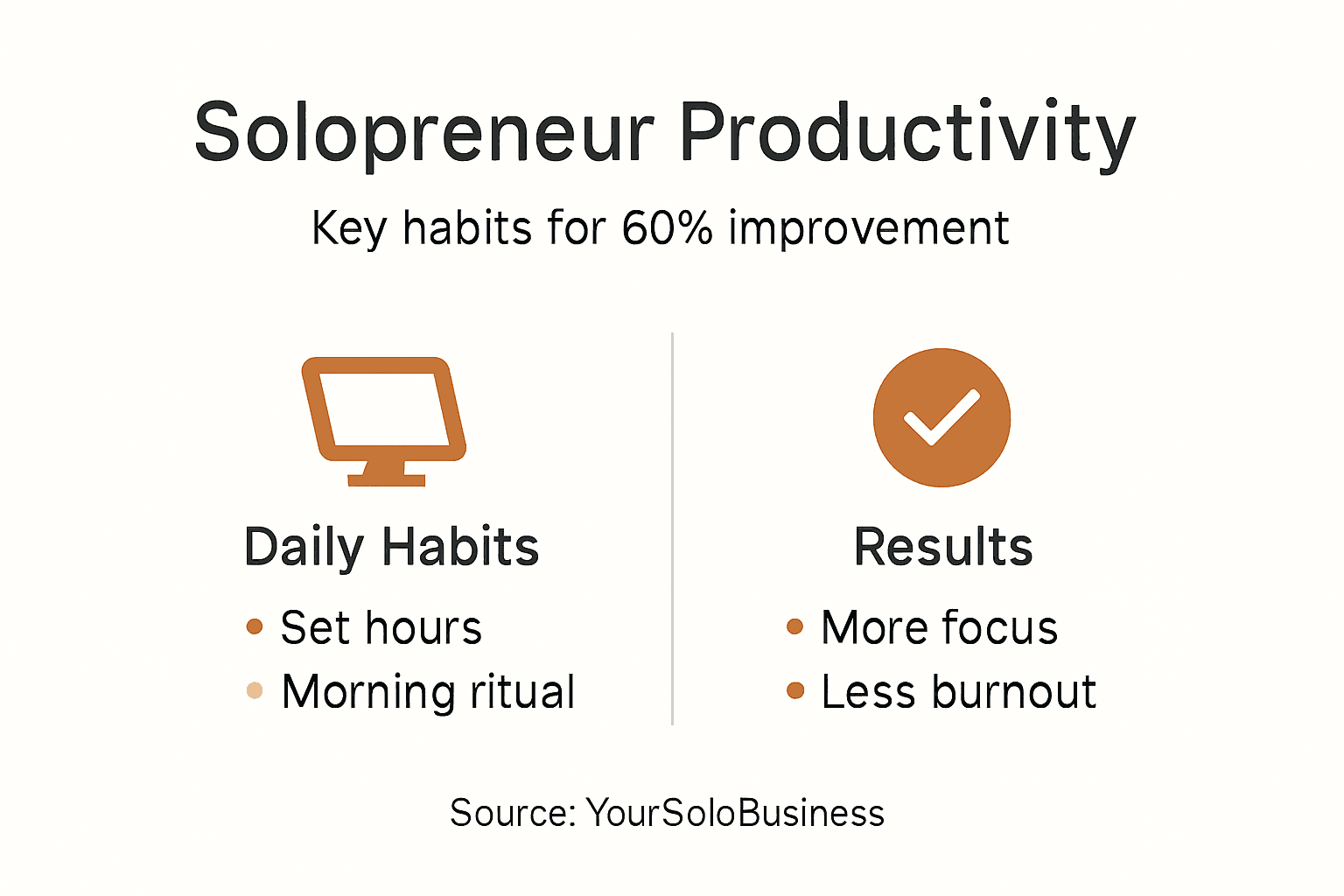
Expect productivity improvements of 15-30% within weeks of habit adoption. Habit adherence leads to 15-30% productivity increase and 30-40% reduction in burnout symptoms. You’ll complete more meaningful work in less time, creating capacity for growth activities.
Burnout symptoms reduce by 30-40% when you consistently maintain work boundaries and breaks. You’ll notice improved sleep quality, reduced irritability, and restored enthusiasm for your work.
Client leads grow by 20-25% from consistent personal branding efforts. Daily visibility compounds into recognition, trust, and inbound inquiries that reduce your sales effort.
| Metric | Baseline | 4 Weeks | 12 Weeks | Measurement Method |
|---|---|---|---|---|
| Daily Productive Hours | Variable | +20% | +30% | Time tracking app |
| Burnout Score (1-10) | 7-8 | 5-6 | 3-4 | Weekly self-assessment |
| Monthly Leads | Baseline | +15% | +25% | CRM tracking |
| Work Hour Consistency | 40% | 75% | 90% | Calendar adherence |
| Energy Level (1-10) | 4-5 | 6-7 | 7-8 | Daily journaling |
You’ll maintain consistent work hours and breaks over a month, creating predictable rhythms that reduce decision fatigue. Improved daily energy and focus become your new normal rather than occasional peaks.
Track these metrics monthly to identify what’s working and what needs adjustment. Small course corrections based on data prevent major derailments.
Monitor your progress using the tracking methods proven effective for solopreneurs.
Building and Maintaining Your Daily Habit System
Your daily habit system transforms from intentional practice to automatic routine through consistent application. Prioritize consistency over perfection in your daily routines. Missing one day doesn’t derail progress, but abandoning the system entirely does.
Review and adjust habits regularly for continuous improvement. What works in your first quarter might need refinement as your business grows and changes. Monthly reviews keep your system aligned with current needs.
Balance productivity, well-being, and personal brand growth for sustainable success. These three pillars support each other, creating a foundation for long-term solopreneur achievement. Long-term commitment to these habits leads to transformative business results that compound over years.
Discover YourSoloBusiness Solutions to Amplify Your Daily Habits
Ready to accelerate your solopreneur growth? YourSoloBusiness offers tailored resources designed specifically for independent professionals like you. Master the art of building your personal brand on LinkedIn with our step-by-step framework that turns connections into clients.

Explore our comprehensive collection of personal branding tips for solopreneurs to stand out in crowded markets. Access our complete productivity toolkit for solopreneurs featuring templates, systems, and strategies that save hours every week.
Frequently Asked Questions
What are the most impactful daily habits for solopreneurs?
Structured work hours, morning rituals focusing on sunlight and movement, focused task management prioritizing three daily goals, consistent personal branding through content and engagement, regular 90-minute breaks, and strategic delegation create the most powerful habit system. These six habits work synergistically to boost productivity while preventing burnout. Together they form a sustainable daily routine supporting both business growth and personal well-being.
How can solopreneurs maintain work-life balance using daily habits?
Set strict work hours with defined start and end times, then protect them like client appointments. Schedule breaks every 90 minutes to refresh mentally and physically. Define a clear end-of-day ritual such as shutting down your workspace or changing clothes to signal psychological closure. Include self-care activities like exercise and hobbies as non-negotiable calendar events rather than afterthoughts.
What tools are recommended for task management for solopreneurs?
Simple, consistent tools beat complex systems you won’t use. Google Tasks, Todoist, or even analog notebooks work well when combined with color-coding for task categories and daily prioritization of your top three items. Digital planners help organize tasks efficiently while maintaining flexibility. The best tool is whichever you’ll actually use every day without friction. Explore more options in our productivity toolkit for solopreneurs.
Why is delegation vital for solopreneurs and what tasks should be outsourced?
Delegation frees 20-30% of your time to focus on strategic growth activities only you can perform. Trying to handle everything yourself caps your earning potential at your personal capacity. Prime outsourcing candidates include bookkeeping, administrative tasks, customer service responses, content formatting, and social media scheduling. Start by outsourcing one recurring task that drains energy but doesn’t require your unique expertise, then expand from there.