
Start narrow. Recruit 10 to 25 founding members by hand. Run one recurring ritual, weekly, for at least eight weeks before adding anything else. That is the entire prescription, and if you do nothing else this month, do that.
Here’s why it works. Trust grows faster in small, invited groups than in open sign-ups because people feel safe testing an opinion in front of 15 peers, not 1,500 strangers. A single repeated ritual, run on the same day and time, gives members a reason to come back before they’ve decided if they like you. And a tiny founding group, treated as co-owners rather than an audience, will defend the culture you’re trying to build long after you’ve stopped being the loudest voice in the room.
In the next 60 to 90 minutes:
- Write a one-sentence purpose statement (who this is for, what job it does)
- Hand-invite 10 to 25 people who already have the problem you’re solving
- Pick one ritual format (a weekly thread, call, or challenge) and a fixed day/time
- Draft a three-line welcome message for new members
- Decide the one metric you’ll track weekly (active members is a fine start)
Key Takeaways
The fastest path to a healthy community is a narrow purpose, 10 to 25 hand-invited founding members, and one recurring ritual run consistently for at least two months.
| Point | Details |
|---|---|
| Start narrow, not broad | Recruit 10 to 25 founding members by hand rather than opening sign-ups to everyone. |
| One ritual beats many events | Run a single recurring format weekly for at least eight weeks before adding more. |
| Track three to five metrics | Watch active member rate, contributor rate, cohort retention, and referral rate weekly. |
| Delegate before you burn out | Hand off one ritual and one moderation duty to a trusted power user by day 180. |
| Fix access before adding programs | Remove scheduling, language, and accessibility barriers before launching new formats. |
| Use free templates to move faster | Yoursolobusiness offers welcome, onboarding, and runbook templates in its AI Toolkit. |
The First 30, 90, and 180 Days
Community building best practices rarely fail from bad ideas. They fail from bad sequencing: too many channels, too many rules, too soon. A staged rollout, moving from a tight founding circle to a steadier cadence to something closer to self-sustaining, keeps a solo operator’s launch realistic instead of overwhelming.
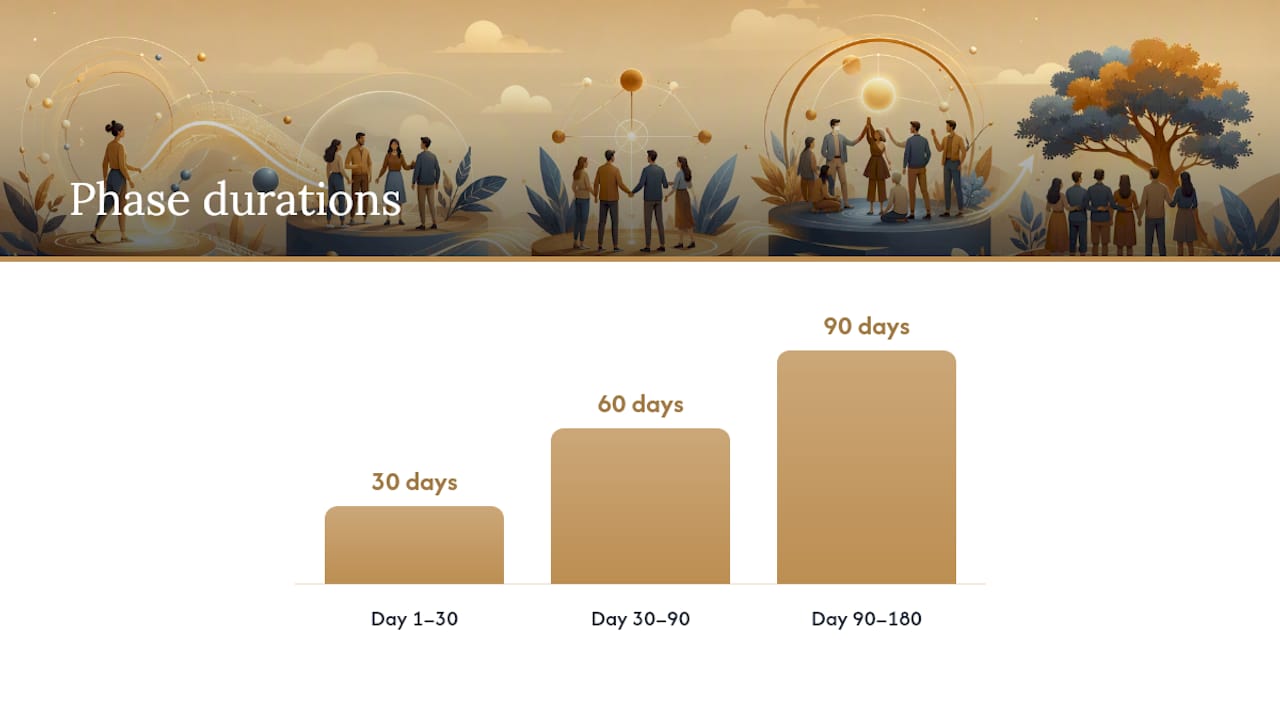
In the first 30 days, your only job is recruiting founding members, running a simple onboarding sequence, and holding your first ritual at least twice. By day 90, you should have three to five recurring formats running, a rough sense of who your power users are, and one retention number from your first cohort. By day 180, you need written moderation rules, a light governance structure, and a plan (even a modest one) for sustaining the work without burning out.
| Timeframe | Primary Goal | Owner |
|---|---|---|
| Day 1 to 30 | Recruit founders, onboard, run first ritual | Solo founder |
| Day 30 to 90 | Establish 3 to 5 recurring formats, spot power users | Solo founder |
| Day 90 to 180 | Document norms, add governance, test light monetization | Solo founder + emerging volunteers |
How Do You Define Purpose, Persona, and Metrics?
Write your purpose as one sentence: “This community helps [specific person] do [specific job] through [specific mechanism].” Then compress your target member into a 12-word identity statement, something like “freelance copywriters replacing agency clients with retainer contracts.” Vague purposes attract vague members who drift.
The job-to-be-done framing matters more than demographics. Ask what task someone is hiring your community to help them finish, not what title they hold. Niche, job-focused communities tend to outperform broad demographic ones on contribution and referral rates because members recognize each other’s problems instantly.
Pick three to five metrics you’ll actually check:
- Active member rate: the percentage who engage in a given week
- Contributor rate: the percentage who post, not just view
- Cohort retention: what percentage of each onboarding batch is still active at 30 and 90 days
- Referral rate: how many new members arrive through existing members
Statistic to anchor your targets: Practitioner guidance from creator communities suggests tracking just three core numbers early on, active members, contributors, and retention, rather than drowning in dashboards you don’t have time to read.
How Do You Build Trust and Psychological Safety?
Trust is not a feeling you announce. It’s a pattern members notice over time: you listen more than you talk, you follow through on small promises, and you give up control faster than feels comfortable. The CDC’s updated engagement guidance frames this directly, describing community engagement as a facilitated process that requires outside leaders to release control rather than direct it from the top.
Practical dos: ask open questions before offering opinions, thank contributors by name in public, and admit when you’re wrong quickly and without defensiveness. Practical don’ts: don’t silently delete disagreement, don’t let one voice dominate every thread, and don’t promise features or rules you can’t maintain solo.
- Run a monthly “ask me anything” where you answer the questions members are actually asking, not the ones you wish they’d ask
- Publicly credit the member who solved another member’s problem
- Create a low-stakes first post format (an introduction thread) so silence isn’t the default
Pro Tip: Once a month, privately message three quiet members and ask, “What’s one thing that would make you post more here?” Their answers surface friction you’ll never see in analytics.
How Do You Design for Inclusion and Accessibility?
A community that only works for one time zone, one language, or one energy level quietly loses half its potential members before they ever complain. Small and rural libraries offer a useful model here: a seven-step engagement approach that treats accessibility as a design input, not an afterthought.
- Rotate live event times across time zones, or record and caption everything
- Offer a text-based option for members who won’t get on video
- Build a simple glossary for jargon-heavy niches so newcomers aren’t lost by week two
- Ask onboarding survey questions about accessibility needs, then actually act on the answers
Quiet members aren’t disengaged members. Often they’re the ones facing a barrier you haven’t asked about yet.
How Do You Recruit and Onboard Founding Members?
Invite people who already have the problem, not people who might be interested someday. Message them personally: “I’m building a small group for [specific job]. I thought of you because [specific reason]. Want in?” That’s it. No pitch deck required.
- List 30 to 50 people from your existing network who fit your persona
- Hand-invite 10 to 25 of them individually, not through a group blast
- Send a short welcome message within 24 hours of joining
- Give every new member one low-risk first action (introduce themselves, answer a simple prompt)
- Follow up personally if they haven’t posted within their first week
Your onboarding flow should move through four stages: orientation (what this is, what to expect), personalization (what does this member specifically want), a first low-risk action, and visible value (a win they can point to within days, not weeks). Watch retention closely in the first 30 to 60 days. That window predicts almost everything about long-term participation.
What Engagement Formats Keep Members Coming Back?
Pick two or three formats and run them relentlessly rather than inventing something new every week. Consistency beats novelty in early-stage communities. One consistent ritual, repeated for months, builds more habit and trust than a dozen one-off events ever will.

| Format | Goal | Cadence |
|---|---|---|
| Weekly wins thread | Surface progress, build habit | Weekly |
| Hot seat / feedback session | Solve a real member problem live | Biweekly |
| Office hours | Lower barrier to asking questions | Weekly |
| AMA with a guest or you | Deliver expertise, spark discussion | Monthly |
| Workshop or skill session | Deliver a concrete skill win | Monthly |
Three runbooks worth stealing:
- Weekly wins thread. Owner: you. Prep: none beyond posting the prompt. Timebox: leave it open all week. Follow-up: react and reply to every post within 24 hours so members see you’re actually reading.
- Hot seat session. Owner: you, with one volunteer member presenting a challenge. Prep: 10 minutes to gather context beforehand. Timebox: 30 minutes live. Follow-up: post a summary of the advice given so non-attendees still benefit.
- Office hours. Owner: you. Prep: none. Timebox: 30 to 45 minutes, same day and time every week. Follow-up: turn recurring questions into a pinned FAQ post.
Design prompts that give members a specific job, not an open-ended invitation. “What’s one thing you’re stuck on this week?” gets far more replies than “How’s everyone doing?” If you run hybrid events, keep the virtual version genuinely equal, not a downgraded recording, and pick formats you can reproduce with almost no setup time each week.
What Governance and Moderation Rules Actually Scale?
Governance for a solo-run community doesn’t need a constitution. It needs a short, written set of norms and a clear escalation path so you’re not improvising decisions under pressure.
| Role | Responsibility |
|---|---|
| Owner/host | Sets vision, models behavior, makes final calls |
| Moderator | Enforces norms day-to-day, flags edge cases |
| Greeter | Welcomes new members, answers onboarding questions |
| Power user | Models engagement, mentors newer members informally |
Escalation should follow a predictable path: redirect first (privately point out the norm), warn second (name it publicly if needed), remove third if behavior continues, ban only for repeated or serious violations. Document your norms in a pinned post before you need them, then enforce quickly and consistently once a violation happens. Slow, inconsistent enforcement damages culture faster than a strict rule ever will.
How Do You Sustain and Scale Without Burning Out?
Sustainability means handing off pieces of the work before you’re forced to by exhaustion. Start by delegating one recurring ritual to a trusted power user, then one moderation duty, then event hosting for a specific format. Guiding frameworks for engagement consistently recommend delegating power and sustaining collaboration as the mechanism that keeps communities alive past the founder’s initial burst of energy.
- Identify your two or three most consistent contributors and offer them a named role, not just praise
- Hand off one ritual at a time, with a short handover document, not all at once
- Test light monetization only after trust is established: a modest paid tier, sponsorships, or a tip jar rather than aggressive upsells
- Revisit your business planning around sustainability roughly every quarter as the community grows
Introduce monetization gradually and transparently. Members who feel blindsided by a sudden paywall leave faster than they joined.
How Do You Measure and Iterate Effectively?
Run a short, honest metric stack rather than a sprawling dashboard you’ll ignore by week three. Active member rate tells you if the community is alive. Contributor rate tells you if it’s participatory or just passive. Cohort retention tells you if onboarding is actually working. Referral rate tells you if members trust it enough to invite others.
Check weekly signals (posts, replies, attendance) every week, review full cohorts monthly, and step back for a strategic review every quarter. A recent systematic review of participatory community methods found that co-creation and community input raise both uptake and long-term sustainability, but only when leaders actually act on what they hear rather than collecting feedback for show.
- Run one small experiment per month (a new prompt style, a different event time) and track its effect for two to three cycles before judging it
- Ask a two-question feedback survey quarterly: what’s working, what’s missing
- Keep a simple log of what you tried and what happened, so you’re not repeating failed experiments a year later
Statistic to keep you honest: Tokenistic engagement, where leaders collect input but don’t act on it, remains one of the most common barriers the same systematic review identified across the studies it examined. Asking for feedback you don’t use is worse than not asking at all.
Which Platform Actually Fits Your Community?
Choose the platform based on the behavior you want, not the features that look impressive in a demo. If you want deep, searchable discussion, a forum-style platform beats a chat app every time. If you want quick, casual back-and-forth, chat-first tools win.
- Forum-style platforms: great for evergreen discussion and searchability, weaker for real-time energy
- Chat-first platforms: great for immediacy, weaker for organizing long-term knowledge
- Hybrid platforms: balance both but often cost more and take longer to configure
- Email-first models: low effort to maintain, but limited for peer-to-peer interaction
For a solo operator, a lean combo (one primary platform plus email for reminders) beats juggling four tools. Before migrating platforms, export your content and warn members early. Nobody wants to lose a year of threads to a surprise switch.
What Do the Leading Community Frameworks Recommend?
Two frameworks anchor most serious community guidance. The CDC’s Principles of Community Engagement stress trustworthiness, shared decision-making, and cultural humility as prerequisites for participation, not nice-to-haves. The IAP2-style spectrum, echoed in Penn State’s community engagement toolbox, ranks engagement from simply informing people up through consulting, involving, and finally empowering them, with each rung requiring more shared control from the leader.
A small library that adopted the seven-step engagement model, focusing first on identifying real community needs and ensuring basic accessibility (transport, scheduling, childcare), saw participation increase specifically because it removed friction before it added programming. The lesson generalizes well beyond libraries: fix access before you add activities.
- Apply informing and consulting first if you’re brand new; involving and empowering come once trust exists
- Revisit the Community Tool Box’s assessment strategies whenever your growth stalls unexpectedly
- Escalate to formal research or outside facilitation only if internal conflict or stalled growth persists past a full quarter
What Legal and Privacy Rules Should You Know?
Running a community, even a small one, creates legal exposure most solo founders don’t think about until something goes wrong. Start with your platform’s terms of service: most hosting tools require you to enforce baseline content standards, and ignoring reported harassment or abuse can violate those terms even if you didn’t create the content yourself.
Collect only the personal data you actually need for onboarding, names, emails, maybe a short survey response, and say plainly what you’ll do with it. If members are in the European Union, GDPR-style consent and data-deletion rights apply regardless of where you’re based; if you’re US-based with a general audience, state-level privacy laws like the California Consumer Privacy Act may still apply depending on your member base and data volume. When in doubt about your specific exposure, a short consult with a lawyer familiar with online platforms is worth more than guessing.
Write a simple code of conduct and a basic privacy note before you launch, not after your first complaint. Decide upfront how you’ll handle takedown requests, harassment reports, and data deletion requests, and put that process somewhere members can actually find it. If you record sessions or workshops, get explicit consent before posting recordings publicly, and never share member contact information with sponsors or partners without asking first. None of this needs to be complicated. It needs to exist before you need it.
What I’ve Learned Running Lean Community Efforts
The hardest trade-off in solo community building isn’t finding time to post. It’s resisting the urge to build infrastructure before you have proof anyone wants what you’re building. I’d rather see a founder run one scrappy weekly thread by hand for two months than spend that same time picking the “perfect” platform.
The clearest signal something is working isn’t a growth number. It’s members starting conversations without you prompting them. Once that happens consistently, you’ve earned the right to add more structure. Automate the repetitive admin (welcome messages, reminders, basic moderation flags) once volume demands it, but keep the actual relationship-building work in your own hands as long as you can.
Free Templates for Your Community Launch
Most of what’s covered here, the welcome message, the 30/90/180 timeline, the ritual runbooks, works better with a template in front of you instead of a blank page. Yoursolobusiness built a bundle for exactly that: welcome message templates, a first-7-days onboarding sequence, ritual runbooks for the three formats above, and a lightweight measurement dashboard you can copy and adjust.

It’s part of the broader AI Toolkit, which also includes automation scripts for repetitive admin work like reminder messages and basic moderation flags, the kind of tasks that eat a solo founder’s time without building any real connection. If you’re weighing how much of this to automate versus handle personally, AI Workflow Automation for Solopreneurs walks through where automation genuinely helps and where it backfires.
This article stands fine on its own. If you want the templates, they’re one click away. If not, you already have everything above to start your founding group this week.
Frequently Asked Questions
What are the most important community building best practices for beginners?
Start with a narrow purpose, recruit a small founding group of 10 to 25 people, and run one recurring ritual consistently. Trust and retention grow from repetition, not from adding features or channels early.
How long does it take to build an engaged community from scratch?
Expect roughly 30 days to establish founding members and your first ritual, 90 days to find your recurring formats and power users, and 180 days to have working governance and a sustainability plan in place.
What’s the difference between effective community engagement and simply broadcasting content?
Engagement means members respond, contribute, and shape direction, while broadcasting is one-way information flow. The IAP2 spectrum frames this as a progression from informing up through consulting, involving, and empowering members.
How do I keep members engaged without spending all day moderating?
Delegate greeter and moderator roles to trusted power users early, document your norms clearly, and automate repetitive admin tasks like reminders so your personal time goes toward relationship-building, not logistics.
Do I need a budget to build a successful community?
No. Most early costs are time, not money. A basic platform, a handful of free templates, and consistent weekly effort matter more than a paid tool stack in the first 90 days.
Sources
- Principles of Community Engagement (CDC) — updated chapters and guidance
- Guiding principles of effective community engagement (Penn State CECD)
- Strategies for Community Change and Improvement (Community Tool Box — KU)
- 7 steps to effective community engagement (American Library Association)