
TL;DR:
- Freelancer client acquisition relies on building a repeatable system rather than one-time efforts.
- Using warm outreach and relationship-building on LinkedIn helps freelancers grow clients faster and more reliably.
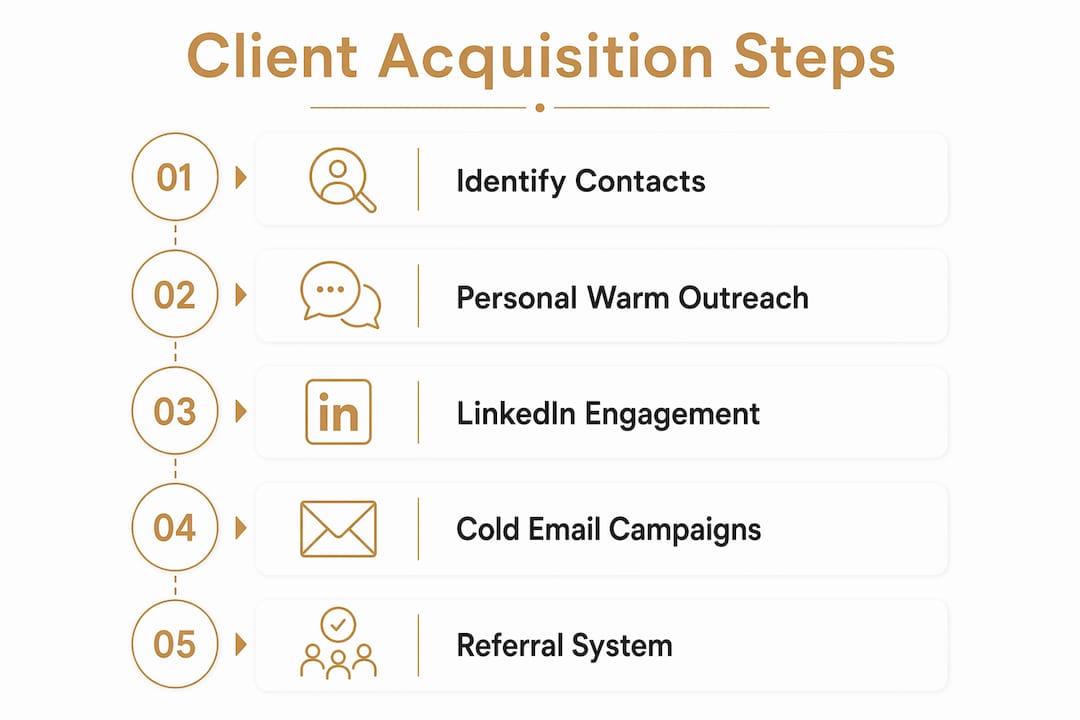
Freelancer client acquisition is the process of building a repeatable system that fills your pipeline with paying clients, not a one-time scramble for work. The difference between freelancers who stay busy and those who feast-or-famine their way through the year comes down to one thing: a system. Warm outreach converts at 40–45% compared to just 3–8% for cold outreach. That gap is enormous, and it tells you exactly where to start when you want to know how to get more clients as a freelancer. The good news? You already have the raw material to build this system today.
How to get more clients as a freelancer using warm outreach
Warm outreach is the fastest path to your first paying clients. New freelancers can land 3–5 clients within 30 days using systematic warm outreach, while reaching 10 clients typically takes 3–6 months with consistent effort. That timeline is encouraging because it is achievable without a big audience, a polished website, or years of experience.

The approach is called the 30-message rule. You reach out to 30 people in your existing network, not to pitch, but to reconnect and ask for referrals. These are former colleagues, old managers, classmates, and anyone who has seen your work firsthand. They already trust you, which is the hardest part of any sale already done.
Here is how to execute it:
- List your contacts. Pull names from LinkedIn connections, your email history, and your phone. Aim for at least 30 people who know your work.
- Write a short, personal message. Keep it to 3–4 sentences. Mention something specific about them, share what you are doing now, and ask if they know anyone who might need your help.
- Make it about a referral, not a sale. Asking “Do you know anyone who might need X?” removes pressure and opens doors naturally.
- Follow up once. If you hear nothing after 5–7 days, send one short follow-up. Most replies come from the second message.
- Track every conversation. Use a simple spreadsheet or a free tool like Notion to log who you contacted, when, and what happened.
Pro Tip: Never send the same message to multiple people at once using BCC. Each message must feel personal. Generic outreach gets ignored, even from people who like you.
The math here works in your favor. If 30 messages yield even a 40% response rate, that is 12 conversations. Even if only 3 of those turn into clients, you have a running business. Start here before anything else.
Does LinkedIn actually work for finding freelance clients?
LinkedIn works, but only if you treat it as a relationship channel, not a job board. Building a prospect list of 50–100 decision-makers weekly before sending any message is the foundation of a working LinkedIn strategy. The key word is “before.” Most freelancers send connection requests cold with a pitch attached. That approach kills trust before it starts.
The better sequence looks like this:
- Identify your target. Use LinkedIn’s search filters to find decision-makers by job title, industry, and company size.
- Engage before you reach out. Comment on their posts, share their content, and add genuine value for 1–2 weeks.
- Send a connection request with no pitch. A simple “I’ve been following your work on X, would love to connect” outperforms any sales opener.
- Start a conversation after connecting. Ask a question about their work. Listen. Build rapport over multiple exchanges.
- Post your own content 2–3 times per week. Short posts that share a lesson, a result, or a perspective build your authority over time.
LinkedIn results take longer than warm outreach. Expect a 4–12 week timeline before you see consistent inbound interest. That is not a flaw. It is the compounding nature of relationship-based selling.
Cold email can supplement LinkedIn when done right. Targeted, personalized campaigns report 8–15% reply rates compared to 1–5% for generic blasts. The difference is specificity. Reference something real about the prospect’s business in the first line. Use a 3–5 step sequence spaced over 2–3 weeks. Tools like Apollo.io for list building and Lemlist for sequencing make this manageable without a team.
Pro Tip: Track your open rates and reply rates weekly. If your open rate is below 40%, fix your subject line. If replies are below 5%, rewrite your first sentence. Data tells you exactly where the message breaks down.
Should you use freelance platforms to find clients?
Freelance platforms like Upwork give you something cold outreach cannot: social proof. A completed project with a five-star review is a trust signal that works 24 hours a day. Platforms typically yield your first client in 1–4 weeks, which is faster than most cold channels. That speed matters when you need momentum.
The strategic play is to use platforms as a launchpad, not a long-term home. Here is how to think about it:
- Use platforms to build your first 3–5 reviews. Reviews create ranking and credibility that you can reference in all other outreach.
- Direct warm leads to your platform profile. When you reach out on LinkedIn or via email, sending prospects to your platform profile lets them see reviews and verify your credibility before they commit.
- Price your first projects about 20% below your target rate. This reduces the perceived risk for a new client and gets you reviews faster. Raise rates after 3–5 completed projects.
- Transition to direct clients over 3–6 months. Once you have reviews and a portfolio, move conversations off-platform to avoid service fees and gain full control of the relationship.
| Phase | Focus | Timeline |
|---|---|---|
| Phase 1: Launch | Build reviews and portfolio on platforms | Weeks 1–4 |
| Phase 2: Supplement | Use platforms alongside direct outreach | Months 2–3 |
| Phase 3: Transition | Move to direct clients, reduce platform reliance | Months 4–6 |
The biggest mistake freelancers make with platforms is staying too long. Platforms are a starting point, not a destination. Use them to build credibility, then take that credibility into direct relationships where margins are better and clients are stickier.
How to build a client acquisition system that keeps working
A system is what separates freelancers who always have clients from those who scramble between projects. Maintaining a structured weekly routine for outreach, content posting, and pipeline tracking creates predictable lead flow. Predictable lead flow means you stop taking bad-fit clients out of desperation.
Your weekly rhythm should include these core activities:
- Monday: Review your pipeline. Follow up with anyone who has not responded in 5–7 days.
- Tuesday/Thursday: Post content on LinkedIn. One post per day, focused on a lesson or result from your work.
- Wednesday: Add 50 new prospects to your list. Research each one for 2–3 minutes before adding them.
- Friday: Send new outreach messages. Aim for 10–15 personalized messages per week across warm and cold channels.
Referrals deserve their own system. Referrals convert 3–5 times higher than cold outbound, yet most freelancers ask for them inconsistently or not at all. After every successful project, tell your client directly that you are open to introductions. Make it easy by offering a short description of your ideal client so they know exactly who to refer.
Pro Tip: Responding to inbound leads in under 60 seconds can increase your close rate by up to 400%. Set a phone alert for new inquiries and treat fast response as a competitive advantage.
One common pitfall: spending weeks building a personal website before you have clients. A brief portfolio that a prospect can review in 90 seconds outperforms a complex website every time. Tools like Notion, Carrd, or Behance get you live in a day. Build the fancy website after you have revenue.
| System Element | Tool Options | Frequency |
|---|---|---|
| Pipeline tracking | Notion, Google Sheets | Daily |
| Prospect list building | Apollo.io, LinkedIn Sales Navigator | Weekly |
| Content posting | 2–3x per week | |
| Referral requests | Direct message or email | After every project |
The business automation strategies available to freelancers today mean you can run this entire system in 60–90 minutes a day. Automate what you can, but never automate the personal touch in your outreach messages.
Key Takeaways
Freelancer client acquisition works best as a structured weekly system that combines warm outreach, LinkedIn engagement, platform credibility, and consistent referral requests.
| Point | Details |
|---|---|
| Start with warm outreach | Contact 30 existing connections first; warm leads convert at 40–45% vs. 3–8% for cold. |
| Use LinkedIn as a long game | Build prospect lists of 50–100 weekly and engage before reaching out; expect results in 4–12 weeks. |
| Treat platforms as a launchpad | Use Upwork and similar sites to build reviews, then transition to direct clients within 3–6 months. |
| Build a weekly system | A consistent routine of outreach, content, and follow-ups creates predictable lead flow. |
| Ask for referrals every time | Referrals convert 3–5x higher than cold outbound; ask every satisfied client for introductions. |
Why volume alone won’t fill your pipeline
I spent the first year of my freelance career thinking more messages meant more clients. I sent hundreds of cold emails, blasted LinkedIn connection requests, and wondered why my pipeline stayed empty. The problem was not volume. It was depth.
The freelancers I have watched build sustainable businesses all share one habit: they master one channel before adding another. They go deep on warm outreach, get consistent results, and then layer in LinkedIn. They do not spread themselves thin across five channels at once and wonder why nothing sticks.
Niching down is the other thing most freelancers resist for too long. A generalist competes with everyone. A specialist gets referred because people remember exactly what they do. When someone asks “do you know a good copywriter?” your name does not come up. But when they ask “do you know someone who writes email sequences for SaaS companies?” the specialist always wins that conversation.
The other lesson I learned the hard way: sales SOPs matter. Having a clear, repeatable process for how you handle inquiries, send proposals, and follow up makes you look professional and reliable. It also means you stop reinventing the wheel every time a lead comes in. Pair that with a personal brand on LinkedIn and you have both inbound and outbound working together. That combination is what makes a freelance business resilient, not just busy.
— Jay
What Yoursolobusiness can do for your freelance growth
Running a freelance business means wearing every hat, and client acquisition is just one of them. The admin, the follow-ups, the proposal writing, the invoicing. It adds up fast.
At Yoursolobusiness, we have built resources specifically for solo operators who want to work smarter without hiring a team. The AI Toolkit covers the exact tools Jay uses to automate prospecting research, draft outreach messages, and manage client communications at scale. If you want to see how AI can handle the repetitive parts of your freelance workflow automation, that is the place to start. Less time on admin means more time on the work that actually pays.
FAQ
How long does it take to get your first freelance client?
Most freelancers land their first 3–5 clients within 30 days using systematic warm outreach. Freelance platforms can deliver a first client in as little as 1–4 weeks.
What is the best way to find clients as a freelancer?
Warm outreach to your existing network is the highest-converting method, with rates of 40–45%. Supplement it with LinkedIn engagement and targeted cold email once your warm list is exhausted.
How do I get clients without using freelance platforms?
Direct outreach via LinkedIn and personalized cold email campaigns are the most effective off-platform methods. Building a simple portfolio on Notion or Carrd gives prospects something to review without a full website.
How many outreach messages should I send per week?
Aim for 10–15 personalized messages per week across warm and cold channels. Consistency over weeks matters more than sending 100 messages in a single day.
Do referrals really make a difference for freelancers?
Referrals convert 3–5 times higher than cold outbound leads. Asking every satisfied client for introductions is one of the highest-return habits you can build.